











Ireland stands on the brink of a profound energy and economic transformation. Government ambitions indicate the potential for up to ~37GW of offshore renewable energy by 2050, subject to policy, infrastructure and market developments, place our coastlines at the heart of the clean energy transition, with implications that extend well beyond climate action and energy security, shaping economic growth, infrastructure investment and long-term national resilience.

The challenge, however, is not ambition; it is execution. Success will depend on whether policy, capital and expertise can be aligned quickly and decisively enough to capture this once-in-a-generation opportunity. A critical part of that opportunity, particularly for Ireland, lies in floating offshore wind, where our deep Atlantic waters offer a natural competitive advantage. Yet realising that potential depends on infrastructure that, today, simply is not in place.
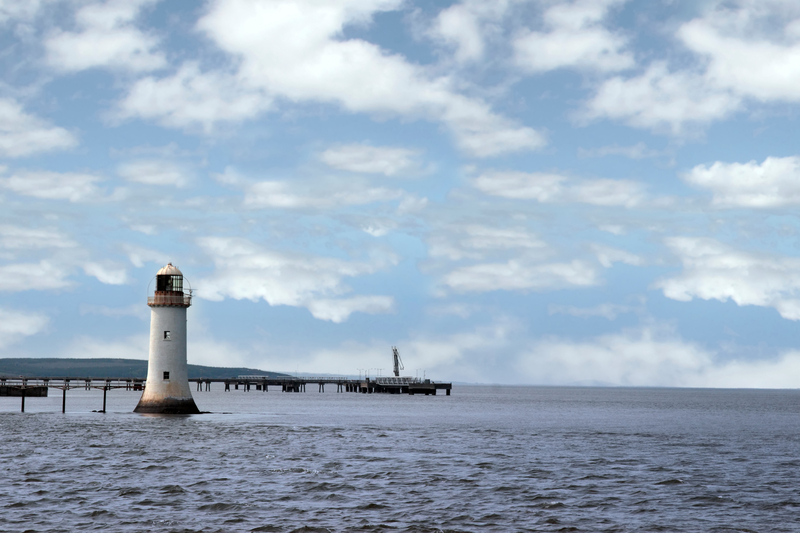
Ireland’s port capacity remains largely unfit for the scale and technical demands of the sector. Current industry analysis suggests Shannon Estuary and Bantry Bay are among the few locations with the deep-water access and scale likely required for commercial floating wind integration. Estimates also indicate Ireland currently has roughly 40-50 hectares of planned laydown space for offshore wind supply chain activity, significantly below projected demand. International benchmarks often point to the need for multiple specialised marshalling ports capable of handling several hundred megawatts annually, with individual projects typically requiring tens of hectares of integration space. This gap is not theoretical; it is hard infrastructure, and unless it is addressed, it will be a drag anchor for Ireland’s net zero journey.

Decisive action being taken further afield offers powerful contrasts and lessons. Countries like Denmark, the Netherlands, and France are investing today in state-of-the-art port and fabrication hubs. If Ireland is to compete, we must move with urgency and build out our port infrastructure. The good news is that groundwork is being laid. Developments such as the proposed expansion at Cork’s Ringaskiddy and plans for Rosslare Europort are early but encouraging signals of momentum. To anchor the offshore wind sector on Irish soil, we need increased multi-port investment – across Shannon Foynes, Bantry, Cork, and Rosslare coordinated to unlock not only deployment, but the longer-term manufacturing, research, and export ecosystem Ireland deserves.
The policy context is evolving, and Ireland’s National Ports Policy is under review and, with the support of the newly established ORE Ports Facilitation Division, should be re-cast to allow for direct state investment and more flexible funding models. Government has set some of the right foundations through the Climate Action Plan and the National Industrial Strategy for Offshore Wind, alongside Ireland’s multi-hundred-billion-euro National Development Plan out to 2035. What is needed now is movement from policy promise to tangible action. Ireland would benefit from a dedicated offshore renewable energy port infrastructure fund, bringing together state and private capital to bridge the investment gap.
It is encouraging to see government signalling increased planning and regulatory resourcing for An Coimisiún Pleanála, MARA, national and local authorities to help process the complex technical applications coming forward from developers. There is clear ambition to accelerate progress after several years of delay, with industry hopeful the coming years will deliver tangible momentum. Upcoming offshore wind auctions will also need to provide sufficient certainty and long-term visibility to stimulate supply chain investment, both domestically and internationally.
But unlocking Ireland’s offshore wind future is not just about infrastructure and policy. It is ultimately about forging much deeper collaboration between engineering consultancies, project developers, the government, and state agencies. Our experience – both internationally and here in Ireland – is that the difference between aspiration and delivery hinges on how early and openly these groups come together to problem solve and set the standards. Too often, organisations struggle to define proven, quantifiable pathways to delivery their portfolios whilst decarbonising such major programmes.
Green procurement will be a decisive factor in scaling offshore renewable energy across Ireland, shaping not just what gets built, but how it is delivered. For the supply chain, clarity of expectation is critical, and confidence continues to hinge on the firmness, or otherwise, of client and government commitment. The reality is that meaningful progress depends on public agencies and major clients setting clear carbon requirements and consistently reinforcing them through procurement. Without that sustained signal, the pace of change across the supply chain is likely to remain cautious.
There is also a real risk that missing Ireland’s legally binding 2050 net zero milestones could carry significant financial, regulatory and reputational consequences at EU level, potentially undermining both public and political confidence in the wider green transition. This is a moment for decisive, tangible action, backed by a collective commitment across government, industry and communities to demonstrate what is possible.
Ireland has the opportunity to turn offshore wind from a policy objective into a lasting national asset. Doing so will require aligned leadership, sustained investment in enabling infrastructure, and a more collaborative approach to delivery across government, ports, developers, and the engineering community. With the right decisions taken now, Ireland can build not just capacity, but capability, securing long-term value for the economy and Ireland’s place at the heart of Europe’s clean energy revolution.
- Subscribe to our newsletter here to receive construction news and insights from around the world straight to your inbox