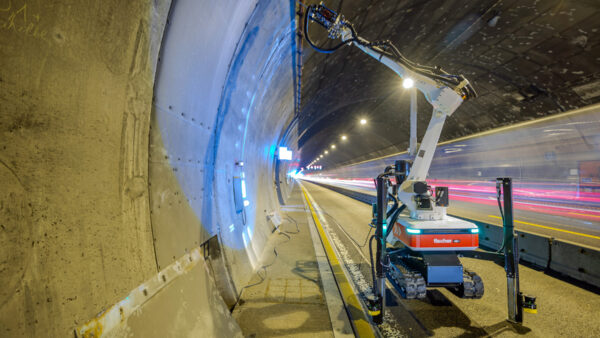















US engineering giant Bechtel has created the role of Senior Vice President of Engineering, Procurement, and Construction (EPC) Transformation to deliver projects using AI, robotics and digital technologies.
Taking up that role is John Platt, who told GCR about the challenge.
How will Bechtel integrate AI, digitisation and robotics with current practices?
Our approach starts with identifying real project challenges, piloting solutions in live environments and then scaling what works across our portfolio.
We like to say we’re a 128-year-old innovation company, we have substantial project experience, data and proven processes.
How scalable do you believe these technologies are?
Extremely, albeit some will move more quickly than others.

Scalability depends on the organisational culture you’ve built around something, we’ve built a strong one that balances centralised coordination of the EPC Transformation effort with our global business unit led innovation.
Of course, every technology won’t become scalable overnight.
Some advances will move quickly, while others will take more time to mature.
It will be a mix of ideas and practical improvements that build momentum over time.
How will these new practices improve project scope and delivery? Can you give any examples?
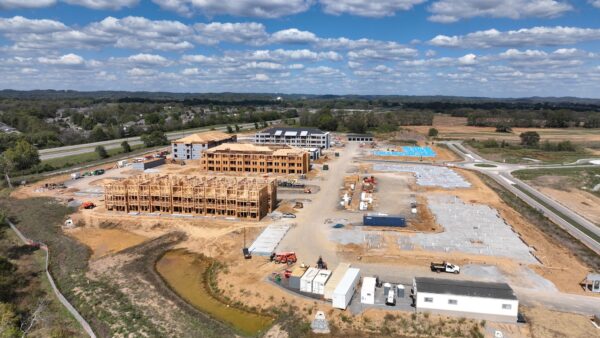
A good example is earthworks: excavation, dozing and compacting, which are some of the more repetitive and labor-intensive parts of construction that show up on nearly every project.
We’re testing excavators, dozers and compactors that can operate autonomously.
The goal isn’t to remove operators, but to enable one operator to supervise multiple machines, step in when needed and keep operations running smoothly and more efficiently.
The goal isn’t to remove operators, but to enable one operator to supervise multiple machines and step in when neede
Another example is our AI-enabled project controls suite.
Project controls teams have traditionally spent significant time producing reports and maintaining schedules, often across fragmented systems. We’re using AI to automate reporting, connect key planning tools and accelerate schedule development.
The result is faster insights, improved schedule quality and earlier identification of potential issues so teams can act sooner and reduce rework.
How do you see the sector changing as a whole in the future?
We believe people will remain central and grow even more important to the business.
The world needs far more critical infrastructure than the industry is able to deliver today. Traditional delivery approaches are being stretched as the population grows and urbanises, fuelling demand for energy, water, transportation and digital infrastructure.
These new tools will free our teams to focus on the high‑value parts of their jobs that rely on experience, judgment and problem solving.
Are there any differences between how Bechtel has worked previously and how it will work with this new technology?
Bechtel has always evolved to meet the needs of the moment, from pioneering advanced construction techniques to adopting computer‑aided design and even experimenting with AI as far back as the 1990s. This work builds on that history.
What’s different today is that we can combine a century of Bechtel data and proven processes with some of the most powerful technologies our industry has ever seen and apply them at enterprise scale.
- Subscribe to our newsletter here to receive construction news and insights from around the world straight to your inbox
Further Reading: