













Cost and time overruns are almost inevitable, but contractors can limit the fallout. Ireland’s MetroLink: take note …
The patterns are identical, the mistakes are predictable, and we keep repeating them.
Ireland’s National Children’s Hospital will cost €2.4bn, over three times its original estimate. HS2 in England has ballooned from £20bn to over £100bn and will not be finished until the mid-2030s. Australia’s Snowy 2.0 jumped from $2bn to over $12bn. Switzerland’s Gotthard Base Tunnel doubled from CHF 6bn to CHF 12bn. The Channel Tunnel, completed in 1994, suffered an 80% cost overrun, reaching £9.5bn against a £4.8bn estimate. Boston’s Big Dig, viewed by many as the most complicated civil engineering project ever undertaken in America, was initially estimated at $3bn, finished nine years late and ended up over 500% above budget.

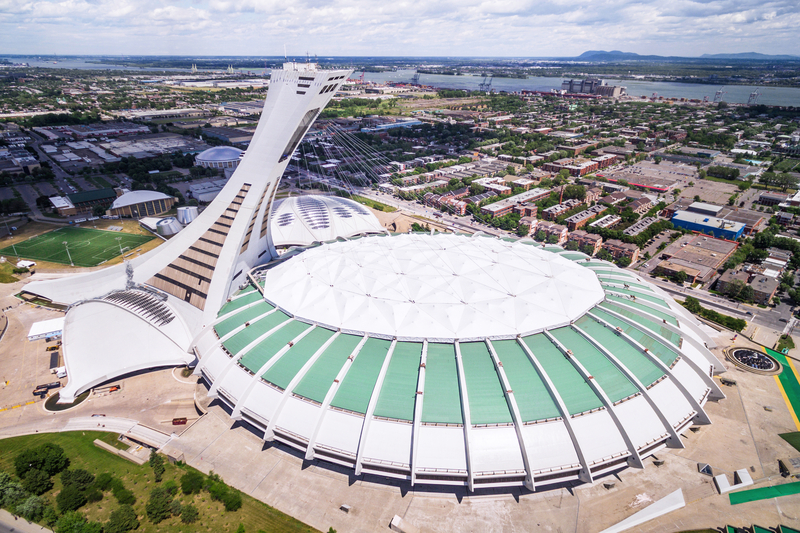
These are not isolated failures, just the latest chapters in a story that goes way back, from the Sydney Opera House in 1957 to Montreal’s Olympic Stadium in 1976, Berlin’s Brandenburg Airport, nine years late and triple its budget, and California’s High Speed Rail, ballooning from $33bn to $128bn with not a single completed segment after 16 years.
The German philosopher Nietzsche described this phenomenon in the 19th century as eternal recurrence, the endless repetition of the same events. Hegel went further, observing that the only thing governments learn from history is that they learn nothing from history.
More than a century later, their words ring painfully true.
The Pattern: Five recurring failures
In 2025, consultant James Stewart published a 130-page review of the HS2 project, identifying the same fundamental errors that plagued Sydney and Montreal sixty years earlier.
As ever, when failure occurs, inquiries are held, reports are written and recommendations are issued – all to be filed away and duly forgotten.
Still, we must try, so here’s my take on the five, recurring failures that doom megaprojects.
1. Grandiose design without realistic cost assessment
We rightly want iconic, world class infrastructure. Sydney Opera House, Montreal’s Olympic Stadium, HS2 and the National Children’s Hospital all aimed for architectural and engineering excellence. But if something has never been built before, costs and schedules can’t be predicted with precision, yet they are still presented as facts rather than very rough estimates.
2. Construction before design completion
Every project management textbook teaches the same lesson, invest time in upfront planning. The more complete the design at tender stage, the greater the likelihood of success. Yet Sydney, Montreal, HS2 and the National Children’s Hospital all started construction before design was finalised. Modern BIM tools such as Autodesk Revit and Navisworks allow full digital coordination in advance, but this requires time and effort. Political pressure to start construction consistently overrides technical prudence.
3. Political deadlines over technical reality
Politicians need sod-cutting ceremonies because they generate headlines and visibility. The false assumption is that an early start means early completion, but history proves the opposite. James Stewart’s HS2 review last year captured this perfectly with the adage of leading megaproject scholar, Professor Bent Flyvbjerg: “Think Slow, Act Fast”.
Stewart also observed that projects don’t go wrong, they start wrong.
4. Too many cooks
Stewart identified that HS2 was governed by multiple overlapping layers, site management, HS2 Ltd, the Department of Transport, the Transport Secretary, the Treasury and ultimately the Prime Minister.
On paper, this appeared robust. In reality, it diffused accountability and paralysed decision making.
5. Cost-plus contracts and do it fast
Stewart was astonished to find large portions of HS2 procured on a cost-plus basis – where contractors get a fee plus project expenses – with overwhelming emphasis on programme rather than cost control.
Fundamental project management principles require scope, cost and programme to be defined and aligned before contract award. Prioritising speed while disregarding cost is a proven route to failure, yet it remains common practice on major infrastructure schemes.
Clients’ basic responsibilities
For clients, the principles of sound megaproject delivery are well understood and quite simple but rarely observed, so here they are again:
- Engage contractors early: Advocated since the Flood, but ever an exception to the rule, involvement at concept and design stage reveals buildability risks, sequencing conflicts and unrealistic assumptions before work starts;
- Finish and coordinate design before tender, as far as is reasonably practicable;
Secure all consents, approvals and permissions prior to construction; - Use modelling technology like Navisworks to build the project digitally first, with the full project team involved, to identify clashes before they manifest on site;
- Establish clear governance and accountability;
- Develop realistic and achievable programmes with input from client, designers, specialists and suppliers.
Six things contractors can do
Contractors have little sway over how megaprojects are conceived and unveiled to the public. They must deal with unrealistic concept designs and irresponsibly optimistic cost estimates.
But there are six things they can do to inject reality into the endeavour, protect themselves and materially improve outcomes.
1. Build it digitally first: Clients may not, but you can. See benefits above.
2. Use live, as-built programmes: Control breaks down when schedules don’t reflect site reality. Tools such as Primavera P6 allow true, as-built programmes to be developed alongside construction. Deviations from baseline can be captured immediately so corrective action is taken early. Without this, delay analysis becomes retrospective rather than preventative.
3. Control costs in real time: Traditional cost control relies on lagging indicators such as invoices and payment certificates that are often weeks if not months behind site activity. On large projects this delay conceals large overruns. Instead, track in real time using purchase orders, delivery dockets and committed cost data. If you don’t, you’ll react too late.
4. Structure daily communication: Toolbox talks and whiteboard planning are operational controls, not administrative chores. Poor daily coordination directly contributes to rework, lost time and programme slippage.
5. Sound the alarm immediately: Contractual risk must be identified and managed from day one. Recognise scope gaps, missing information and client driven change and issue properly recorded early warning notices promptly to shield yourself from blame. Delayed notification and poor records are the most common causes of unrecoverable loss.
6. Expose optimism bias early: Conduct independent reality checks. Test programme and cost assumptions against data from similar completed projects. This exposes optimism bias early and replaces design and bid-stage assumptions with evidence based benchmarks.
Here we go again?
Ireland is about to start another megaproject with the approval in October of Dublin’s MetroLink, a high-frequency commuter railway, 18.8km long with 16 stations including Dublin Airport.

Will it follow the same pattern of failure? Weirdly, there are signs it might not.
Politicians may pluck cost figures from the air, but MetroLink doesn’t. It hasn’t given a cost estimate, saying instead: “The forecast of costs can only be established when the final arrangements for the project are sufficiently clear, and the design has been sufficiently advanced to allow a proper realistic assessment of the base costs.”
That should be music to our ears.
Also, since October 2020, Transport Infrastructure Ireland has been consulting with Professor Bent Flyvbjerg and Dr Alexander Budzier about the project.
Maybe, just maybe, we can prove Nietzsche and Hegel wrong.
Eamonn Coyle MCIOB is a Chartered Engineer and Chartered Environmentalist with 30 years international construction industry experience.
- Subscribe here to get stories about construction around the world in your inbox three times a week