














Force majeure isn’t always the silver bullet contractors in difficulty might think it is.
From Russia’s ongoing invasion of Ukraine to the closure of the Strait of Hormuz, geopolitical instability continues to disrupt construction supply chains.
Contractors facing delays and rising costs may look to force majeure provisions as a basis for contractual relief, but under standard FIDIC Conditions of Contract for Construction (Red Book) terms, the threshold for invoking force majeure is often misunderstood.

In particular, the requirement that the contractor must be “prevented” from performing its contractual obligations sets a high evidential bar that can result in surprises for the unwary contractor, and not nice surprises.
Clause 19 of the FIDIC 1999 Red Book (and the 2017 Red Book, as it relates to “Exceptional Events” under Clause 18) provides that where a contractor is “prevented” from performing its obligations by force majeure, and suffers delay or incurs cost as a result, it may be entitled—subject to the contractual claims procedure—to an extension of time, where completion is or will be delayed, and to recovery of cost where the event falls within specified categories such as war, riots, or explosions in the country.
In practice, a contractor must establish several elements. It must demonstrate that it was prevented from performing a contractual obligation, and the alleged force majeure event must be the cause of that prevention.
If the contractor wants an extension of time, it must show that the event caused critical delay to completion and provide a reliable analysis of the period of delay attributable to the event.
Where costs are claimed, the contractor must establish that the event falls within the categories for which costs are recoverable, that it occurred in the country where required (if this limitation is applicable), and that the costs were caused by the event, are contractually recoverable, and are properly substantiated.
Finally, contractors must also comply with the strict notice provisions set out in the contract, which typically require notice within 14 days of becoming aware of the event.
Prevented, or hindered?
In many force majeure disputes, the central issue is whether the contractor was truly “prevented” from performing.
Guidance issued during the covid pandemic emphasised that prevention requires more than showing that performance has become more difficult, expensive, or inefficient.
Rather, it generally requires circumstances approaching impossibility of performance, such as government orders requiring the closure of construction sites; the employer suspending works; or physical blockades preventing access to the project or delivery of essential materials.
If alternative means of performance remain reasonably available, even if less convenient or more costly, tribunals are likely to conclude that the contractor was not “prevented” within the meaning of the clause.
Was the Black Sea really closed?
A recent scenario illustrates how closely such claims may be scrutinised.
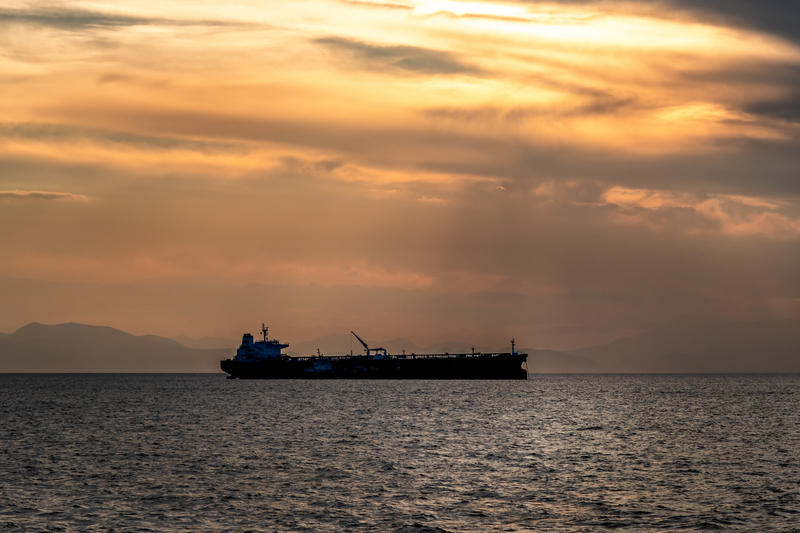
In this case, the contractor alleged that sea mines placed in the Black Sea during the Russia–Ukraine conflict prevented it from receiving critical materials required for the project. The contractor said vessels transporting those materials could not safely transit the Black Sea, resulting in delay and additional cost.
It relied primarily on correspondence from a subcontractor stating that a particular vessel had been delayed because of mines.
However, commercial vessel movements are available and, in this instance, they showed that the vessel was already behind schedule before entering the Black Sea owing to delays unrelated to the conflict.
Once in the Black Sea, it continued to make additional port calls which took it along a northerly route where mines had been reported. Evidence showed that alternative southern routes remained open and were being used by other vessels.
The analysis undermined several key elements of the contractor’s claim, namely that:
- There was no prevention: While certain routes carried risks, shipping in the Black Sea had not ceased and alternative routes remained available;
- Causation was not established: The delays were primarily attributable to the commercial decisions made by the contractor’s logistics agents, rather than the alleged force majeure event;
- Critical delay not established: The review demonstrated that much of the claimed delay pre-dated the alleged event, meaning it could not properly be attributed to the conflict.
Doing it right
Force majeure claims are sometimes advanced on the assumption that the mere existence of war, pandemic, or other extraordinary circumstances will automatically justify contractual relief. In practice, however, such claims are subject to the same rigorous scrutiny as any other construction claim.
Parties seeking to rely on force majeure should therefore ensure that they:
- Provide timely contractual notices and comply strictly with claims procedures;
- Maintain contemporaneous records demonstrating how the event affected performance;
- Critically assess supply-chain assertions, rather than simply passing them through from subcontractors or suppliers;
- Undertake robust delay analysis demonstrating impact on the critical path; and
- Demonstrate mitigation efforts, including attempts to identify alternative procurement routes or methods of performance.
The key takeaway is that force majeure claims should be carefully examined before presentation rather than accepted at face value. Modern project data, from logistics records to vessel-tracking information, often allows the factual basis of such claims to be tested in detail.
The outcome of such claims frequently turns not on the existence of disruption alone but on whether the evidence shows that the event actually prevented performance and caused measurable delay or cost within the framework of the contract.
- Ciaran Williams, Michael Davar and Bryan Dayton are with global law firm Squire Patton Boggs