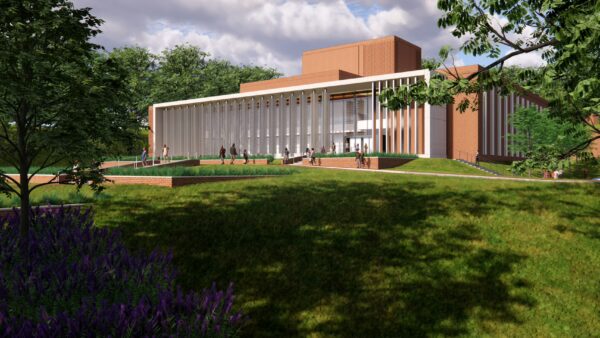















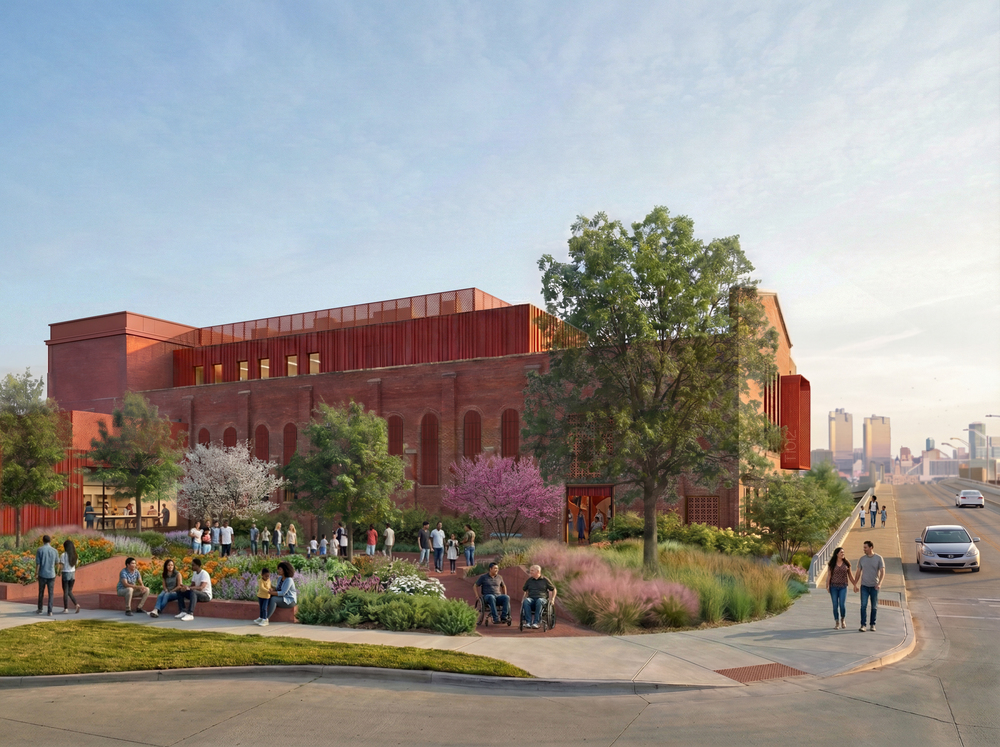
A former Ku Klux Klan headquarters in Fort Worth, Texas will be refurbished as an arts and cultural centre with areas dedicated to communities targeted by violence and exclusion including the Black, Catholic, Hispanic, immigrant, Jewish and LGBTQ+ population.
The Ku Klux Klan vacated the three-storey, 35,000-sq-ft building at 1012 North Main Street in 1927, after which it served as a warehouse for a local department store, then a boxing and concert hall before being taken over by the Ellis Pecan Company from 1946 to 1999.
The redevelopment is being led by Transform 1012, a coalition of arts organisations, community groups and civic leaders.

The ground floor will contain a 250-seat theatre, spaces for woodworking, fabrication, artist areas, workshops, classrooms, an interfaith chapel, bar and cafe, and outdoor amphitheatre.
The second floor will contain a youth area, two rehearsal spaces for dance and movement, and gallery dedicated to Fred Rouse, who was lynched in 1921.
The third storey will contain administrative offices, co-working spaces, conference rooms and a landscaped rooftop terrace.
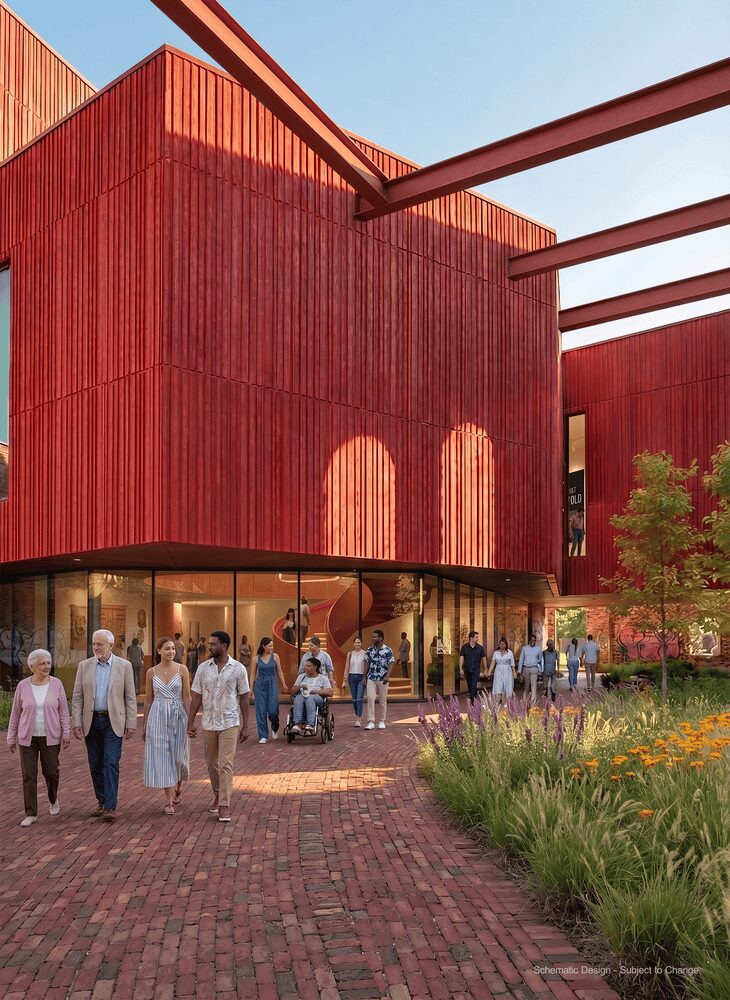
Selective demolition will save 195 tons of material from landfill, with the recovered material documented and reused.
New exterior materials such as weathering steel, striated concrete panels and perforated metal screens will be displayed alongside new earth-toned materials that reference the building’s original brick.
A design competition for Transform 1012 N. Main Street attracted 27 entries and was won by a team featuring Germane Barnes from Studio Barnes, Dennis Chiessa of ch_studio, Maria Gomez from GFF and Ujijji Davis Williams from landscape architect JIMA Studio.
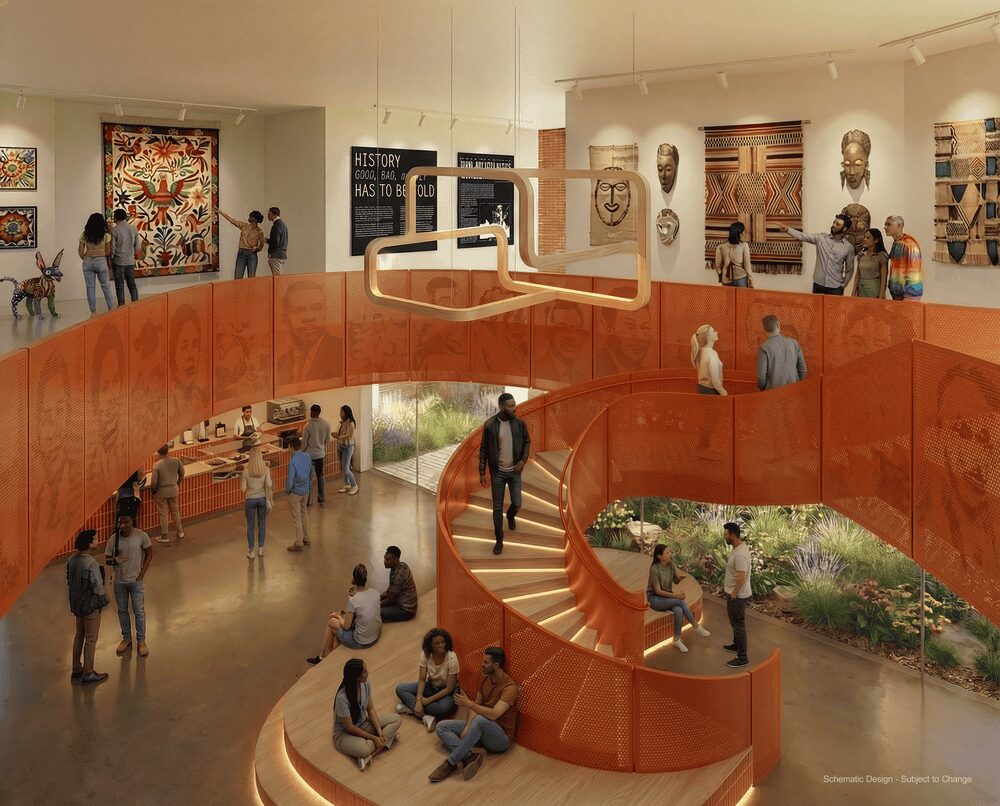
A joint statement from the architect team said: “We rarely design on neutral ground. For us, the central challenge was determining how to transform a structure defined by racial violence into a catalyst for community and restoration.
“While the site’s dark history offered a strong case for tearing down the structure, our design approach seeks to confront the past rather than erase it. The landscape is curated to encourage moments of reflection essential for communal healing.
“The theatre’s rotation beyond the existing frame is a deliberate act of refusal. It declares that joyful performance and collaboration must be accessible to all. Ultimately, this project uses architecture as a tool for reparative justice, stitching the urban fabric of Fort Worth’s Historic Northside to support a more resilient, equitable future.”
Work is due to start in summer 2027 and finish in winter 2028.
- Subscribe to our newsletter here to receive construction news and insights from around the world straight to your inbox