











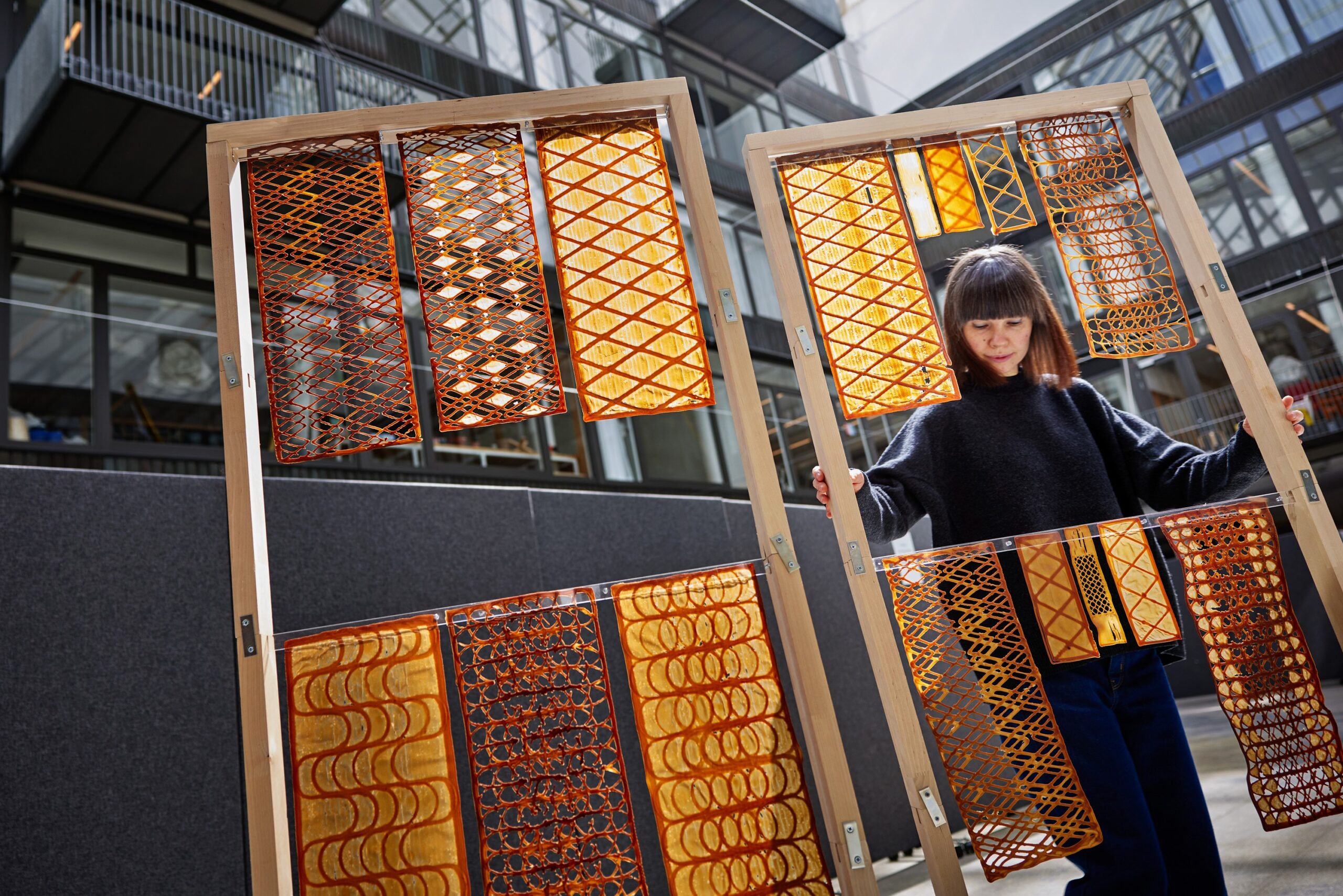
A team from Sweden’s Chalmers University of Technology has created a printable bio-based material made from yeast which they claim can replace plaster, plastic or synthetic textiles for architectural and interior design elements.
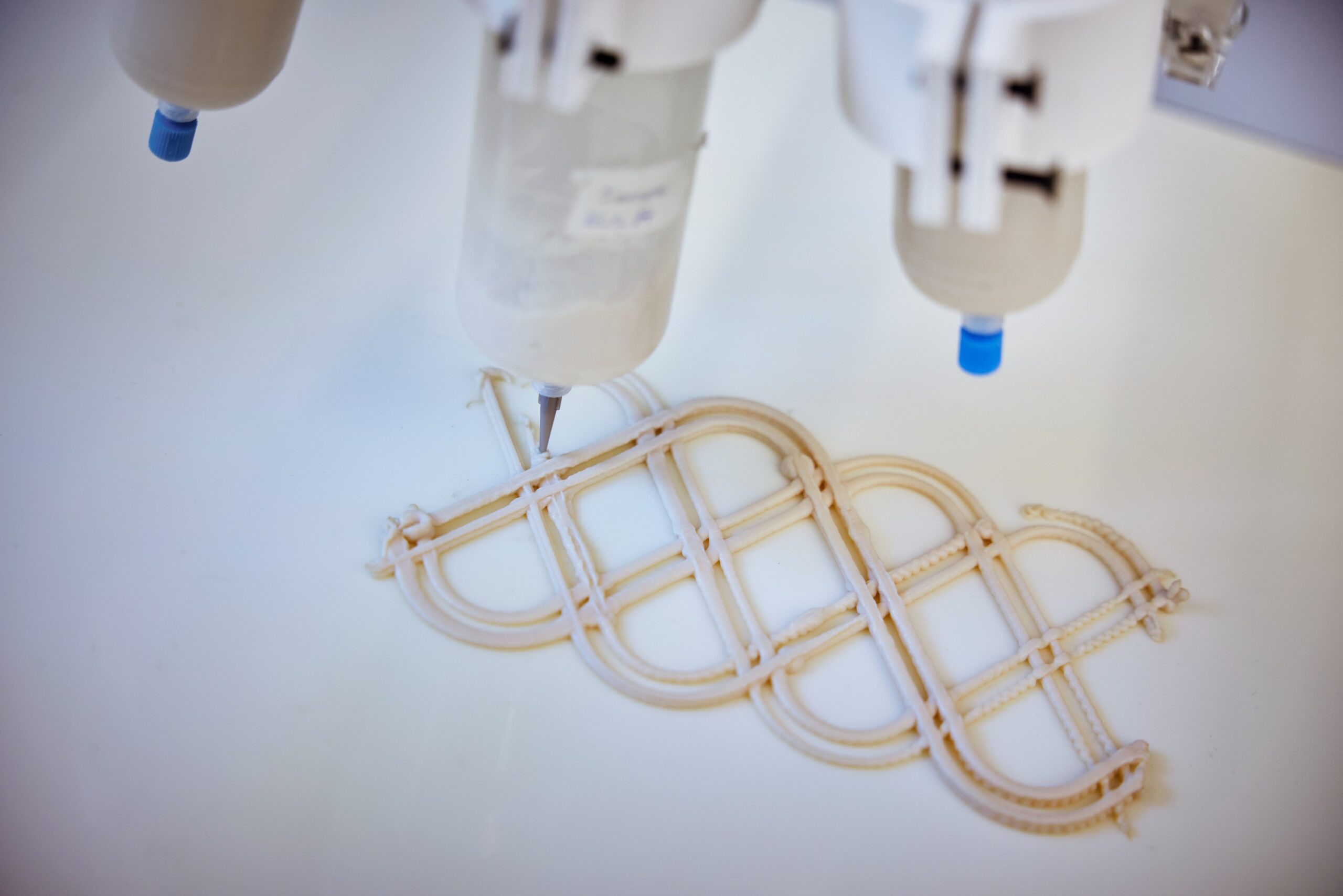
The material is made from baker’s yeast, cellulose fibres from wood, alginate from algae, glycerol from plants, and water – all combined into a soft hydrogel.
Glycerol acts as a plasticiser and provides flexibility, alginate contributes to the dimensional stability needed for printing, cellulose provides tensile strength, and yeast is the binding agent.
The process begins by heating yeast to deactivate it, then adding ingredients together to form a smooth mass.
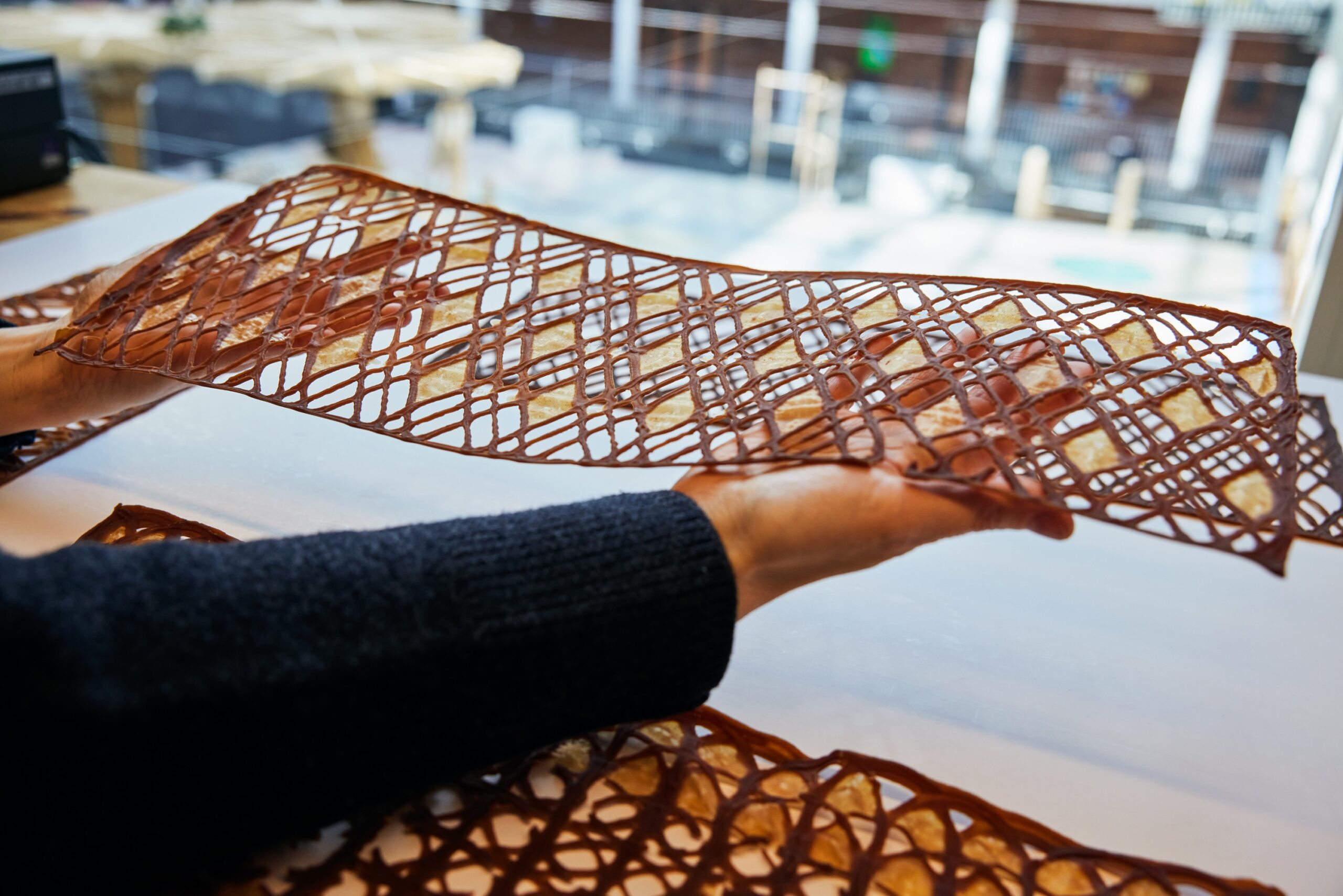
The architectural elements are printed under pressure at room temperature without the need for energy-intensive heating or additional support structures.
The formula can be adjusted to change the material’s transparency, colour and surface texture, which the team at Chalmers University of Technology say lends itself to daylight modulating and sunlight protecting screens, wall panels or room partitions.
The material is biodegradable and can be recycled after use.
The team notes that further research is needed to test the material’s strength, fire safety, moisture performance and scalability for it to be used widely in construction.
“Essentially this research is about creating an architectural material made entirely from organic, renewable ingredients,” said Malgorzata Zboinska, a professor at the Department of Architecture and Civil Engineering at Chalmers.
“Engineered Living Materials could involve self-healing materials or materials that purify the air by neutralising harmful substances and pollutants.”
Zboinska continued: “Yeast grows exponentially. It does not require strictly controlled environments and is not particularly sensitive to contamination. Because it consists of single-celled organisms, we can produce a more homogeneous, predictable material.”
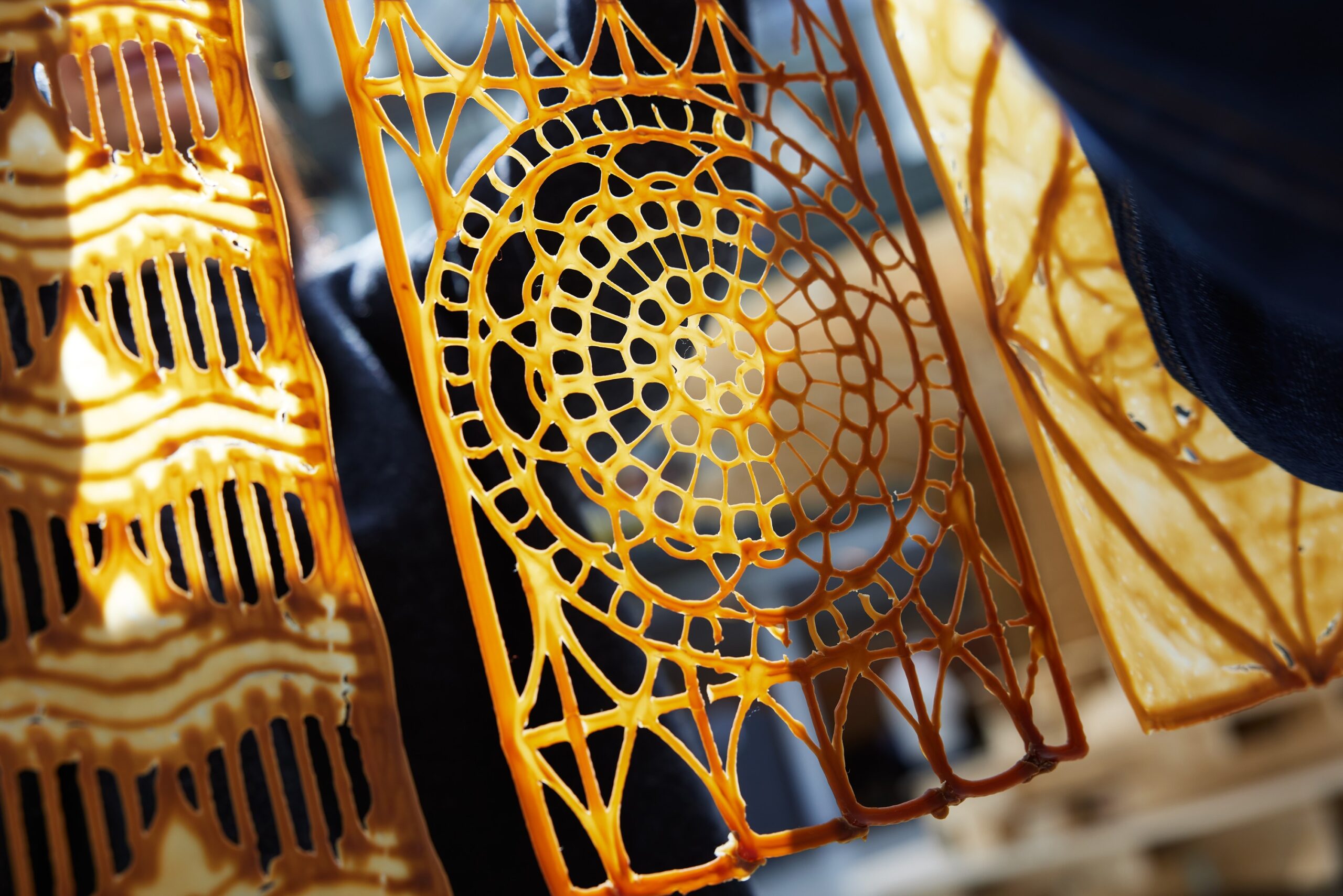
Yagmur Bektas, a doctoral student at the university, said: “3D printing makes it possible to create complex shapes without producing waste. We can design and manufacture the material directly with a high degree of control over its shape, texture and material distribution.”
An article about the project has been published in the journal Frontiers of Architectural Research.
- Subscribe to our newsletter here to receive construction news and insights from around the world straight to your inbox
Further Reading: