














Project directors can’t sift through terabytes of raw data to see what’s going on. AI can.
Every major infrastructure project starts with a perfect plan. The schedule is tight, the sequencing is logical, and the 3D models show how thousands of moving parts will come together. But anyone who has managed a mega project knows what happens next. The moment the first shovel hits the dirt, reality starts moving faster than the plan can keep up.
The issue on site today isn’t a lack of visibility. Contractors have drones in the air, cameras on cranes, and laser scans capturing every inch of progress.

The real bottleneck is time. Project directors don’t have the luxury of sifting through terabytes of raw data, and they certainly don’t have the margins to wait for a manual progress report that takes a week to compile. By the time the data is processed, the site has already changed. They just need to know one thing: Did what we build yesterday match what we were supposed to build?
Aligning data with reality
This is where artificial intelligence (AI) is stepping in to do real, pragmatic work on the ground. It isn’t acting as some autonomous manager or replacing the expertise of the project team. Instead, it is doing the heavy, unglamorous job of data alignment. AI is taking that daily firehose of site photos and scans and automatically comparing it against the original project plan. It bridges the gap between the schedule and the dirt.
In the past, keeping the schedule and 3D model synced with site reality was a highly specialised, painstaking task. It required a Virtual Design and Construction (VDC) expert to manually stitch drone data onto the schedule. Because it took so long, the broader project team rarely had access to real-time insights. The 3D model essentially became a rear-view mirror instead of a steering wheel.
This is the exact friction that AI is removing today. By using reality-capture platforms, machine learning algorithms are now incredibly good at looking at unstructured reality data, like a photo of a concrete pour or a laser scan of steel framing, and knowing exactly where that fits into the 4D schedule. The technology flags what’s been installed, what’s delayed, and what was built out of sequence.
Preventing costly site errors
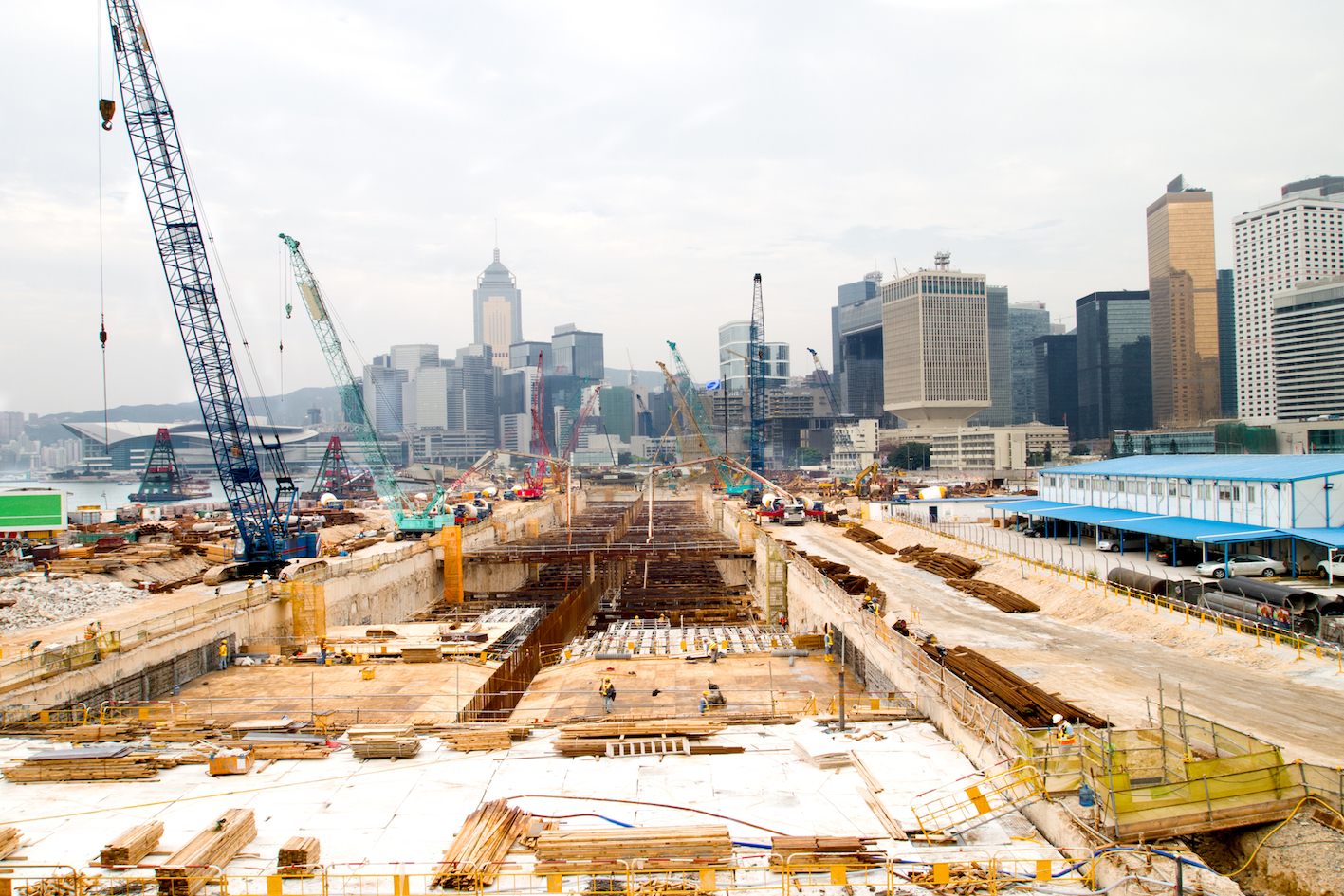
Consider a typical Tuesday on a big transit project. The schedule says a specific section is ready for a major concrete pour. But out in the field, the MEP sleeves aren’t fully installed, or a rebar inspection was delayed late Monday afternoon. Traditionally, the VDC team sitting in the trailer might not catch this until the weekly coordination meeting. By then, the concrete trucks are already idling at the gate, a profoundly expensive logistical headache.
When AI is constantly running data alignment in the background, the superintendent opens their tablet over morning coffee, sees a glaring red discrepancy between yesterday afternoon’s site scan and today’s 4D model, and halts the dispatch before the trucks even leave the plant.
Instead of waiting days for an update, the project manager gets an automated, accurate read-out. It’s at this point we can safely call the model a true digital twin. It’s no longer just a pre-construction planning tool; it becomes a living reflection of the site that project teams can trust to manage their daily operations.
Empowering the field team
The real power here isn’t just speed, but accessibility. When AI does the heavy lifting of data alignment, you no longer need to be a software specialist to get answers.
Several large multinational contractors are already using these integrated workflows to democratise decision-making on their mega-projects.
With AI, a site engineer can instantly see if yesterday’s earthworks hit the target. A commercial director can verify physical progress before approving a massive contractor payout. AI removes the technical barrier, shifting these tools out of specialised departments and right into the hands of the people actually building the asset. It acts as a co-pilot, giving teams the confidence to make decisions before a minor delay cascades into a critical path failure.
Start narrow, go deep
So, how do contractors navigate this transition without wasting time and money? The worst thing a firm can do right now is deploy AI broadly just to tick a box. Generic chatbots and vague corporate implementations don’t move the needle on a multi-billion-dollar job.
My advice to firms is simple: start narrow and go deep. Pick one specific, high-friction problem on your site. Maybe it’s tracking short-term scheduling, or verifying earthworks progress against the plan. Apply AI strictly to solve that single issue. Prove the return on investment there first. Build trust with your field teams by showing them how the tool makes their Friday afternoons easier, rather than making them feel like they are testing unproven software.
Ultimately, the successful adoption of AI in construction won’t be defined by who has the flashiest algorithms. It will be defined by who can most reliably turn site data into action.
Morgan Hays is senior director of product management, construction, at Bentley Systems
- Subscribe to our newsletter here to receive construction news and insights from around the world straight to your inbox