













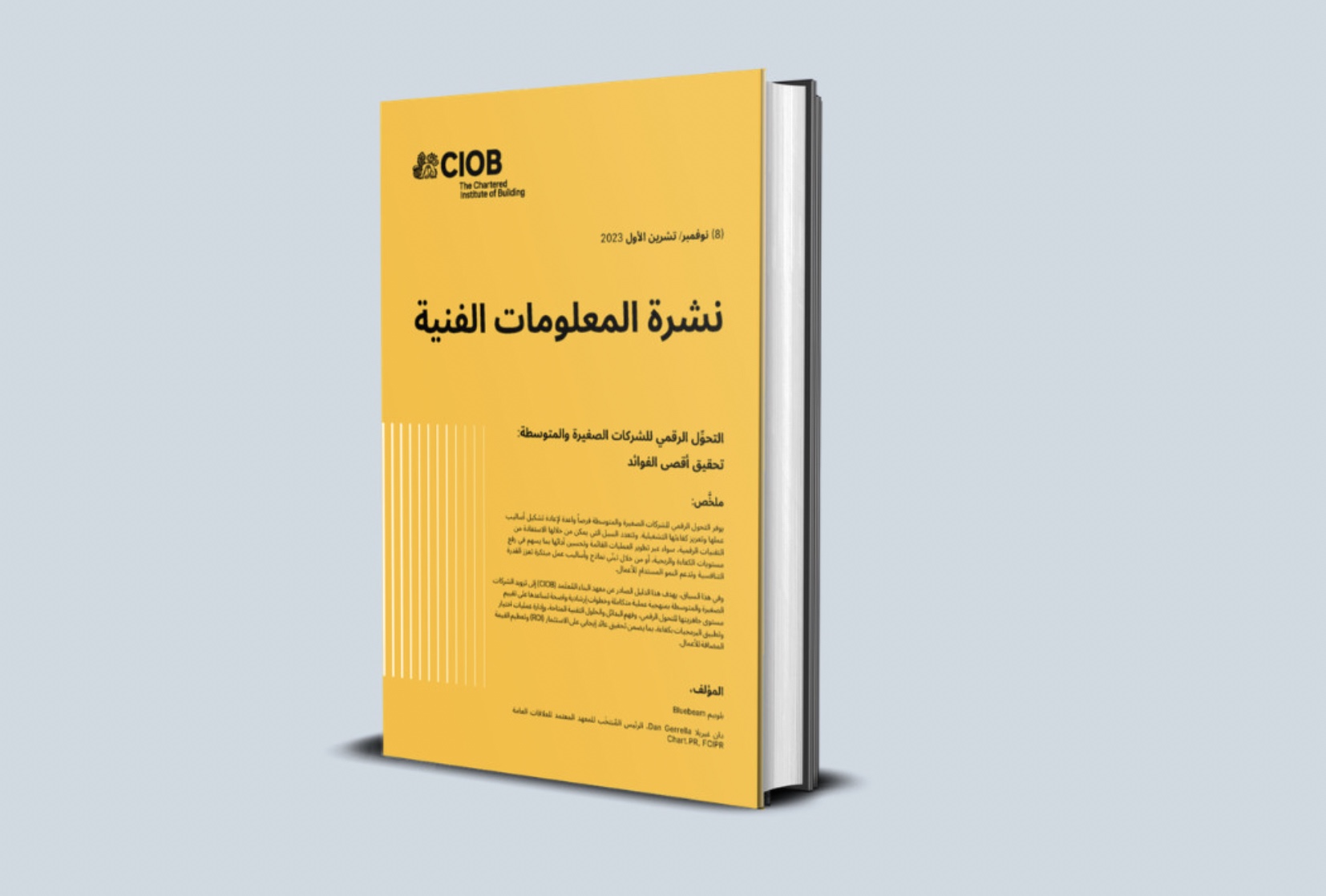
The Chartered Institute of Building (CIOB) has begun publishing its technical information sheets in Arabic. Here, Dr Gina Al-Talal FCIOB, head of technical and standards development at CIOB, explains why.
Part of being the world’s largest professional body for construction management and leadership is making sure our knowledge, guidance, and resources are accessible to professionals wherever they are.
We publish a wide range of technical information designed to help construction professionals and businesses build competence, develop their skills and apply industry best practice.
These resources are developed by industry experts and cover topics that matter to organisations of every size, particularly small and medium-sized enterprises (SMEs), which, as we all know, form the backbone of the construction sector in many countries.
However, we also recognise that making knowledge available is only part of the challenge, and making it accessible is equally important.
For many SME owners and construction professionals across the Gulf and wider MENA region, English may not be the language they use in their day-to-day work. While many are multilingual, accessing technical guidance in their native language can make a significant difference to how easily information is understood, shared, and ultimately put into practice.
That is why we have begun translating selected CIOB Technical Information Sheets into Arabic.
Our first two publications are Retrofit of Buildings and Digital Transformation for SMEs: Unlocking the Benefits.
They’re free for CIOB members. Non-members are asked to pay a small fee.
Driven by industry need
The decision about what to translate is driven by industry need. We prioritise guidance on subjects that are globally applicable and where sharing international best practice can benefit construction professionals.
Digital transformation and retrofit are excellent examples of this. While individual regulations or market conditions may differ, the principles of good construction management remain universal.
This approach resulted from conversations with our regional hub committees and members across the MENA region. They highlighted that while many professionals work comfortably in English there is strong demand for high-quality technical resources in Arabic, particularly among students, recent graduates and those working in organisations where Arabic remains the primary language.
Some universities across the region also continue to teach construction-related subjects in Arabic, making translated technical guidance an important resource for the next generation of construction professionals.
The response from our members has been extremely encouraging. Volunteers from across the region have supported the initiative through peer review and feedback, helping to ensure the translations are both technically accurate and culturally appropriate.
Professional human translators
We also made the conscious decision to use professional human translators rather than relying solely on AI, recognising the importance of preserving technical accuracy and industry terminology.
In my opinion, this approach reflects one of CIOB’s greatest strengths – our global membership. By drawing on the expertise of professionals working across different countries and cultures, we can produce resources that are relevant, practical and trusted.
And the work does not stop here; we are already exploring the translation of further publications into Arabic, including guidance on cyber security and our Inclusive Artificial Intelligence Recruitment Guide for SMEs.
As digital technologies continue to develop in construction, it’s important to ensure businesses of all sizes can access practical advice on topics such as cyber resilience and responsible AI use.
By removing language barriers and making technical knowledge more accessible, we are helping to ensure innovation, expertise and best practice can be shared across borders for the benefit of the entire global construction community.
- Access our Technical Information Sheets here