














As cities work to improve air quality, one source of emissions continues to fly under the radar: diesel-powered compact construction equipment.
A familiar feature of urban life, these machines operate close to homes, schools and workplaces, yet their contribution to air pollution is often overlooked.
While larger equipment and on-road vehicles are subject to increasingly stringent emissions standards, compact diesel machines continue to benefit from a regulatory framework that is far less demanding. As a result, they can make a disproportionate contribution to urban air pollution. Their widespread use in cities also means noise can be a significant issue for both site workers and nearby communities.
Practical, commercially viable solutions already exist, but first it is important to understand why this gap persists.
Why emissions from compact machines matter
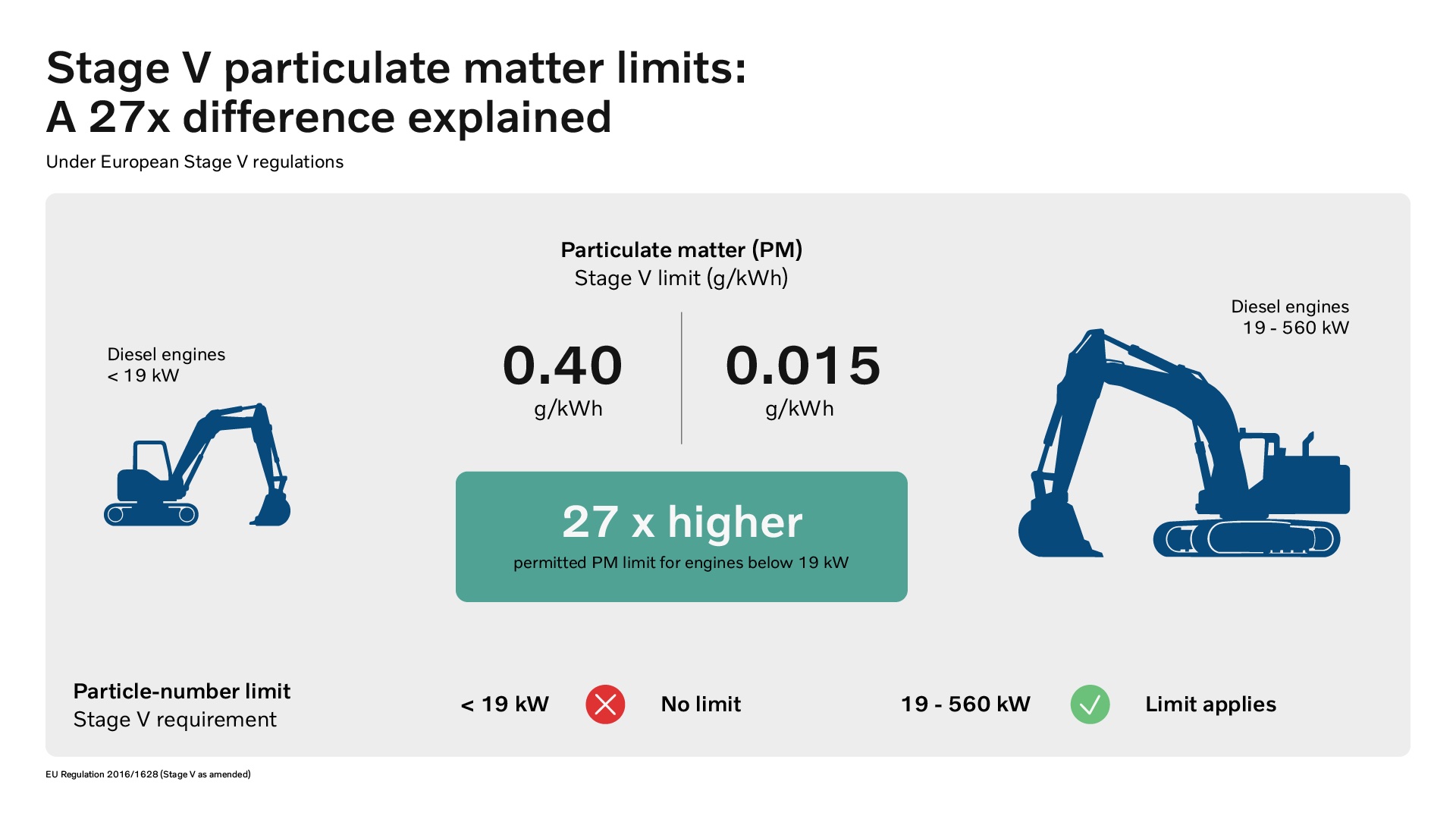
Under Europe’s Stage V rules, diesel engines below 19kW may emit up to 0.40g/kWh of particulate matter (PM), around 27 times the 0.015g/kWh limit applied to engines between 19 and 560kW.
They are also exempt from particle number limits and are therefore not required to use diesel particulate filters.
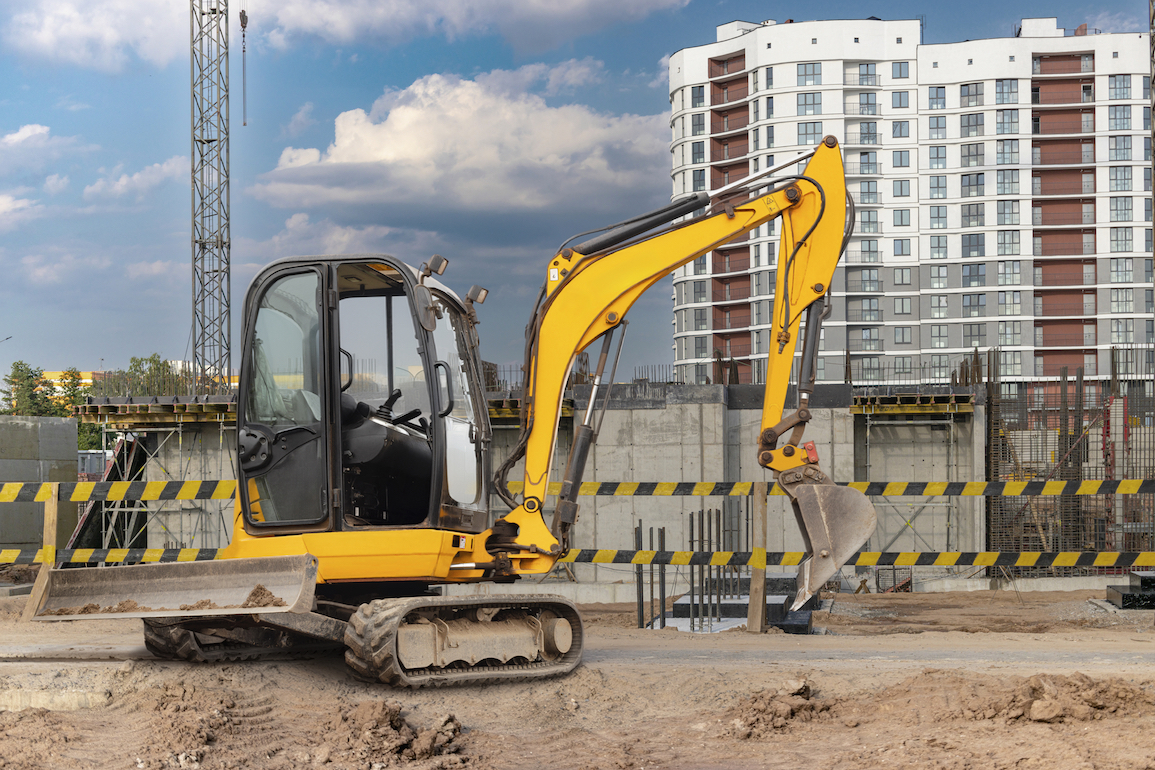
Many of the 2-3 tonne compact excavators commonly used on urban construction sites fall into this category. This creates a significant regulatory gap because these machines are widely used in towns and cities, often close to site workers, pedestrians and building occupants.
The issue is becoming more visible as road-traffic emissions continue to decline. Recent research identified construction activity as a dominant source of black carbon in central London, with hotspots linked directly to active construction sites. Black carbon is a component of fine PM and is linked to serious health impacts.
Based on typical utilisation rates in London and the current regulatory PM limits, a small diesel machine could have an annual PM impact comparable to around 15 Euro VI diesel cars, which highlights the scale of both the regulatory gap and the electrification opportunity.
The less stringent requirements applied to compact diesel machines also contribute to higher NOx emissions than those from larger equipment fitted with more advanced emissions-control systems. Addressing this gap presents an opportunity to significantly reduce both PM and NOx emissions in urban environments.
From emissions challenge to electric opportunity
Electric machines produce no tailpipe emissions at the point of use and are significantly quieter than their diesel counterparts. Published Volvo CE data shows that the EC18 Electric has a sound power level around 13dB lower than its diesel equivalent. To put that into perspective, around 20 EC18 Electric machines could operate simultaneously before reaching the same sound power as a single diesel equivalent.
Reduced noise benefits operators, site teams, and neighbouring communities, while making noise-sensitive urban work easier to manage.

One of the key barriers to wider adoption remains charging. New approaches are helping to address this. In London, Volvo CE has worked with Charge Fairy and customers to test telematics-enabled mobile charging, where charging vehicles are dispatched based on when and where machines need energy.
Instead of taking the machine to the charger, energy is brought directly to the machine on site. Solutions like this can remove practical barriers to electrification. The next challenge is scaling these solutions across larger fleets and sites.
One important lesson from London is that scaling electric construction requires collaboration across the entire value chain, from manufacturers and charging providers to contractors, financiers and city authorities. These insights are now being applied in a similar mobile charging pilot in Copenhagen.
Creating the conditions for faster adoption
The technology exists. The challenge is scaling it. This was a key theme at London Climate Action Week, where Volvo CE brought together policymakers, industry leaders, researchers and air quality advocates.
Policy and procurement will be critical drivers. Under the European Green Deal (EGD)’s Zero Pollution Action Plan, the European Commission aims to reduce premature deaths from PM2.5 exposure by 55% by 2030 compared with 2005 levels.
Achieving that ambition will require greater attention to construction emissions, including compact machines that sit outside many urban emission control schemes.

Three actions are needed to accelerate adoption. First, compact construction equipment should be included in Low Emission Zones and Clean Air Zones.
Second, public procurement should increasingly ask for low and zero-emission equipment, creating demand at scale.
Third, clearer and more consistent regulations would give contractors and equipment owners the confidence to invest.
Cleaner, quieter construction
Encouragingly, governments and cities are already demonstrating what is possible. Oslo now requires all public works to be zero-emission, while Helsinki and Copenhagen have set targets for emission-free machinery on public projects. The Netherlands has also developed an ambitious roadmap for transitioning construction equipment to zero emissions.
Additional measures can help reinforce this momentum. In the UK, the proposed “Ella’s Law” seeks to make clean air a human right, while initiatives such as Fossil Free Sweden are encouraging public and private sector buyers to commit voluntarily to emission-free construction.
The technology exists. The solutions exist. What is needed now are the policy, procurement and market conditions to scale them. Compact construction equipment should no longer be an overlooked source of urban pollution. By closing the regulatory gap and creating stronger incentives for zero-emission equipment, policymakers, cities and industry can accelerate the transition to cleaner, quieter construction and healthier cities.
- Thomas Bitter is head of Volvo CE’s compact business unit