













As temperatures rise, GCR spoke to Tom Adlington, sector sales manager of building services and construction at Scottish product supplier Aggreko, about how changing weather patterns will affect materials prices, company margins, project planning and productivity.
Can you describe how the climate is changing across Europe and how this will affect construction in the short and long term?
Across Europe, changing weather patterns are already having a profound impact on construction. This becomes more complex because the changes are not uniform, so must be tackled country by country and, in some cases, region by region.

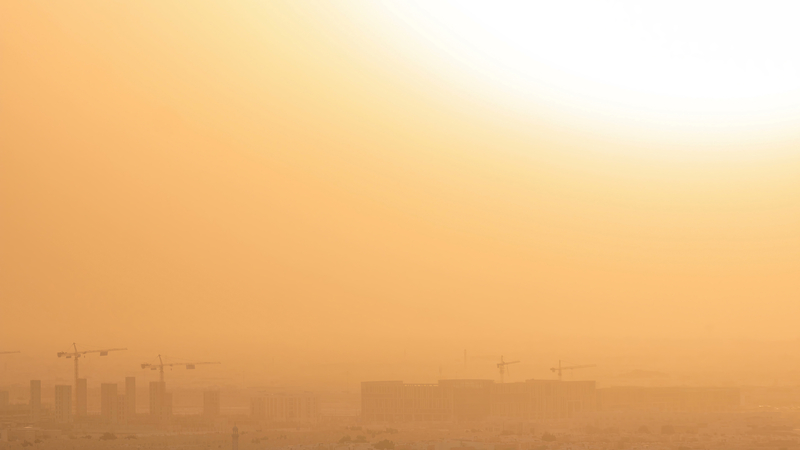
Temperatures are generally rising and the short-term effect of this is increased project delays. These are caused by equipment breakdowns, worker welfare issues and damage to materials as well as deliveries taking longer.
Longer-term, if extreme temperatures continue as we expect they will, warmer parts of Europe will likely see the biggest impact. Floods are becoming more frequent and in many cases, more destructive, causing further disruption.
One clear example comes from the UK, where the Met Office predicts that by 2070, summers will be 4 – 7°C warmer and winters 30% wetter than in 1990.
How will shifts in weather affect material performance and supply?
Changing weather patterns affect how materials are transported. Supply chains, many of which are already complex and span many countries with varying weather patterns, will be further challenged as weather grows increasingly unpredictable. This could cause delays and put more pressure on project timelines and costs.
More than 37% of respondents across Europe to an Aggreko survey named extreme weather patterns as one of their top three concerns, showing that this is a problem people in the industry are aware of, though not enough is being done about it.
Wetter weather makes timber more susceptible to rot and, in drier, hotter climates, it is subject to thermal expansion and fire.
When materials become harder to access, costs rise. These problems are compounded by increasing costs for transport and equipment.
How is this affecting economic stability overall and companies’ margins?
Delays due to weather are already showing up in companies’ margins. What this means is that there is less room for error than ever before. This applies to the entire industry, from major manufacturers and suppliers to contractors.
Over 75% of respondents to an Aggreko’s survey across Europe said that they had seen major delays to projects caused by extreme weather in the past year. Almost 35% of respondents also said that delays have been met with financial penalties leading to longer-term financial pressure which, given the reduced outputs, is much harder for companies to simply absorb.
A decrease in working hours due to heat has already been enforced in some countries. Do you believe this will spread?
Rules around working with heat are currently being discussed in the UK. Light physical work is already limited to 25°C or below in Spain. It is possible that as extreme weather becomes commonplace, more countries will implement similar laws and the construction industry will need to adapt.
The restrictions eventually put in place may be around times of day work can take place, the number of hours allowed to work, or as in Spain, responding to the local temperature. Any new rules should be tailored to the needs and risks impacting the workers and the industry within that region.
This need to adapt can be seen in Aggreko’s survey results, in which nearly 30% of UK respondents named extreme heat as posing the most risk to sites, whereas those in Ireland cited the same issue in less than 17% of responses.
How can third parties and governments work with construction companies to mitigate the effects of adverse weather effects?
Suppliers, specialist partners and governments can help construction firms prepare for the conditions climate change is bringing. Planning for sudden and extreme weather events is a challenge and adaptations must be localised, rather than broadly applied to Europe as one market.
Working closely with suppliers can help, as can access to the right equipment such as heating, cooling and drying solutions. Being able to get hold of necessary solutions in a timely manner can prevent expensive delays.
Governments can also change rules for housebuilding so that buildings are suited to the conditions of the next several decades and built in locations that will support their longevity.
Similarly with infrastructure, governments can ensure that flood defences are well-placed and designed to take future flooding into account.
How is Europe faring when compared to the rest of the world?
While productivity loss is a major challenge in Europe that needs to be addressed, Europe is faring relatively well compared to North America and South East Asia.
As the impact of climate change increases, the European construction industry should act now to get ahead of what we know is around the corner.
What steps can construction companies take now to help in the future?
Construction companies would benefit from making resilience a priority. Contractors should utilise heating and cooling capabilities and work with specialist partners such as Aggreko to ensure temporary cooling or HVAC solutions are available when needed.
Data is essential and using tools such as remote monitoring can resolve small issues before they escalate, meanwhile N+1 redundancy provides a safety net that can reduce or eliminate downtime.
Using hired solutions allows companies to use the latest technologies to reduce risk without having to invest heavily.
- Read Aggreko’s 2025 report, Building in Resilience: Weather Proofing European Construction in a Changing Climate, here.
Further Reading: