













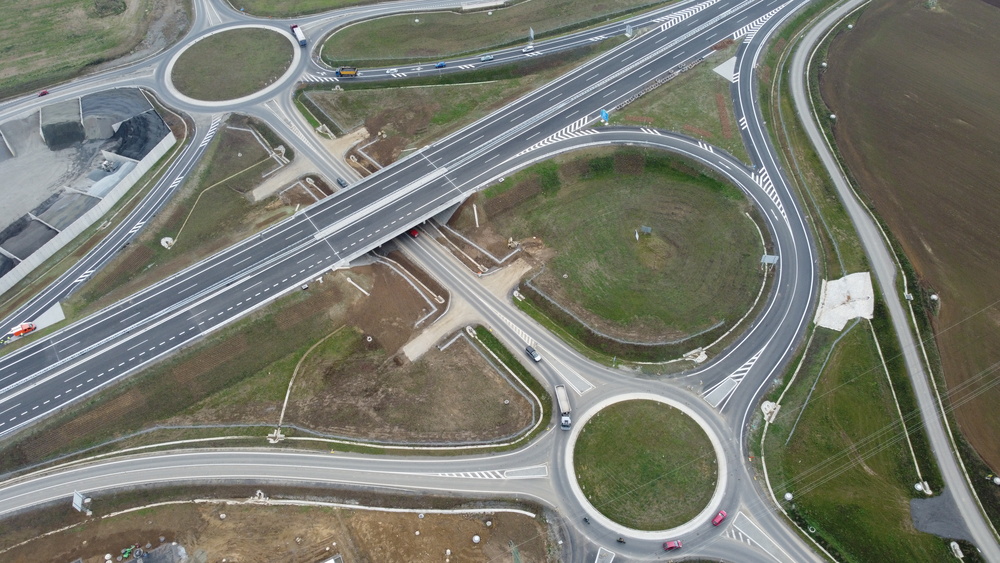
The Czech Republic’s D4 Highway, the country’s first to be procured through a public-private partnership (PPP), has begun introducing AI-based systems.
The road runs from Příbram in Central Bohemia to Písek in South Bohemia, consisting of four-lanes running 48km, comprising 32km of greenfield sections and 16 km of brownfield areas.
It was built by a 50/50 consortium of Meridiam and Via Salis, comprising Vinci Concessions and Vinci Highways.

Via Salis selected German AI, BIM and built asset management company Thinkproject to manage all project information and workflows across delivery, handover and operations.
The tolled highway opened in 2024 and has cut travel time between Prague to Písek by some 20 minutes.
GCR spoke to Daniela Pedret, Via Salis’ communications director and Renzo Taal, chief executive of Thinkproject about the D4 Highway’s 28 year maintenance contract, AI piloting and future PPP project in the region.
How has AI been integrated into the highway?
Daniela Pedret: AI has not yet been widely integrated into the core systems of the D4 Highway project. However, we have recently begun testing AI-based solutions in selected systems to evaluate their potential for improving efficiency and supporting day-to-day operations. At this stage, these solutions are in a pilot and learning phase, helping us assess their suitability for future implementation.
Renzo Taal: The D4 project reflects where much of the infrastructure industry is today. AI is beginning to be explored in targeted use cases, the priority has rightly been establishing the trusted information foundations that will enable AI to deliver meaningful value over the long term.
The industry already has the data it needs. The challenge is that too much of it remains locked away across disconnected systems, documents, and workflows. AI doesn’t solve that problem on its own, it depends on connected, governed information. That’s why we see information management as the foundation for AI adoption. As those foundations mature, AI will increasingly help organisations improve decision-making, automate repetitive tasks and support more efficient delivery and operations across the asset lifecycle.
Are there any other ways AI-driven platforms can be used during similar projects and are there any plans to increase its use?
Daniela Pedret: Yes, we believe AI has significant potential to support large infrastructure projects in many areas, including Common Data Environments, model checking, document management, and operational dispatching. We are currently monitoring the latest developments and evaluating where AI can deliver the greatest value while meeting our project and business requirements. As the technology continues to evolve, we expect its use to expand across a broader range of project processes.
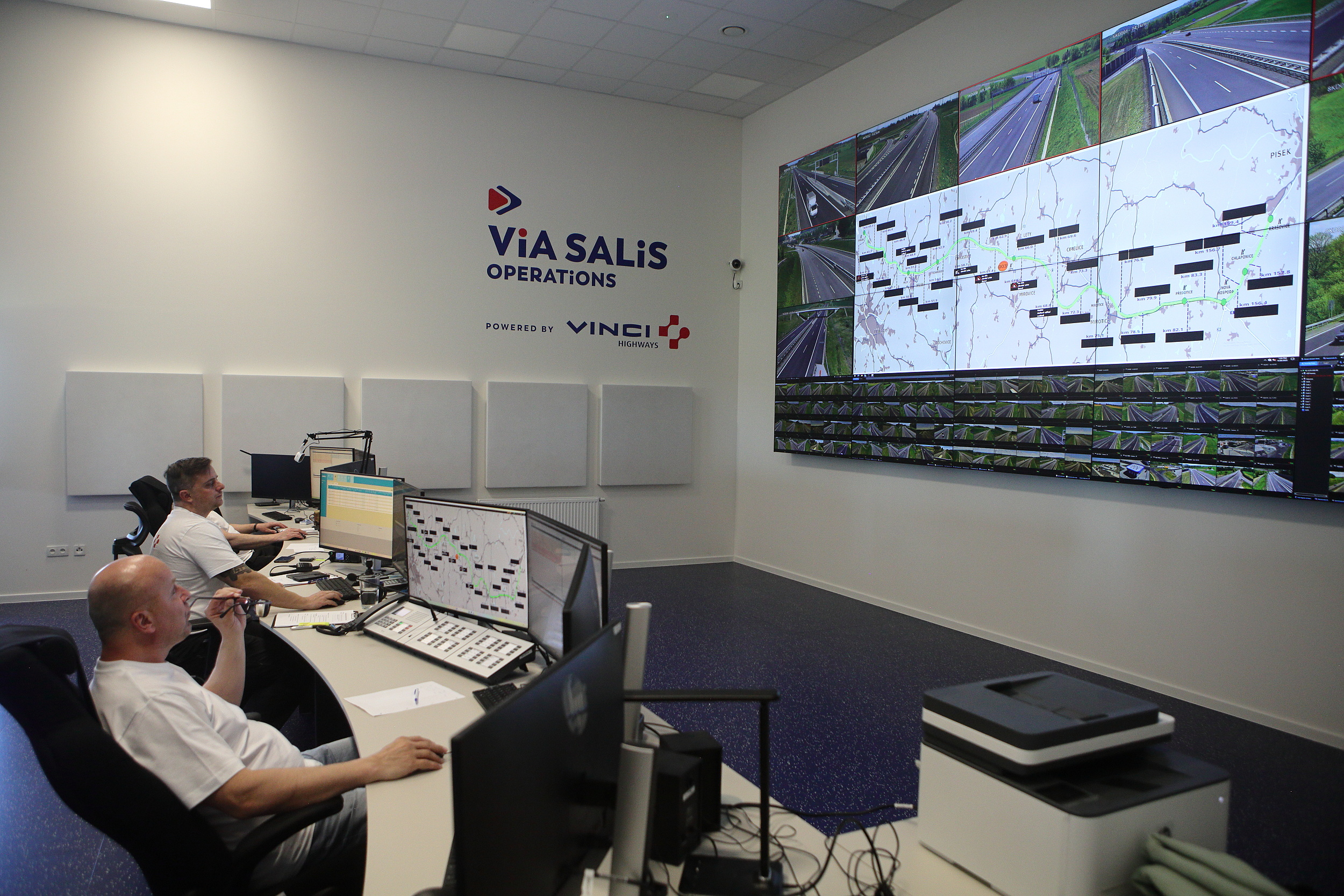
Renzo Taal: We believe the next phase of AI is moving beyond information retrieval towards supporting decisions and execution. AI shouldn’t just tell teams what happened, it should help them understand what matters, decide what to do next, and automate repetitive work.
But AI is only as effective as the information it has access to. Organisations don’t need to become AI experts; they need trusted information foundations and technology partners that can continuously bring new AI capabilities into their existing workflows.
Please describe Thinkproject’s role in the project.
Daniela Pedret: Thinkproject has been one of our key partners, providing a reliable Common Data Environment (CDE) that supports efficient collaboration and information management. Their platform helps us meet our contractual requirements by ensuring that project information is well organised and easily accessible. It has streamlined our daily workflows and improved the overall efficiency of project delivery.
Renzo Taal: Our role wasn’t simply to provide technology. It was to help establish the information foundations that enabled collaboration during construction and continuity into operations.
Increasingly, organisations recognise that construction is only one phase of an asset’s life. The information created during delivery needs to remain connected, governed and valuable for decades afterwards. Projects such as the D4 demonstrate how effective information management creates long-term value by supporting collaboration today while providing trusted information throughout the asset lifecycle.
What are Meridiam and Vinci’s roles within Via Salis?
Daniela Pedret: Meridiam, Vinci Highways and Vinci Concessions are the project shareholders, responsible for the design, financing, construction, maintenance and operation of the highway throughout the entire 28-year concession period.
Do you believe more PPP projects will be built in the Czech Republic?
Daniela Pedret: Based on a government decision, there is a list of projects expected to be financed through the PPP model. These include both highways and railways. The list is regularly updated to reflect the current political and economic situation.
How has French investment played a role in the D4 project?
Daniela Pedret: The PPP project concessionaire provides financing during the construction phase. After the highway is opened to the public, the concessionaire ensures its maintenance and operation and is repaid through availability payments.
What materials have been excavated and how were they reused?
Daniela Pedret: Both Vinci and Meridiam are implementing an ambitious environmental strategy, with the circular economy as a key component. During the construction and modernisation of the D4 Highway, nearly 100% of the old asphalt was recycled. Material from mining spoil heaps in the Příbram region was also used.
The goal was to maximise the use of local and reused materials while minimising the environmental impact associated with transportation. Waste and rainwater are also reused in operational processes.
How many wildlife crossings were built and how is biodiversity being incorporated into the development?
Daniela Pedret: A total of 40 bridge structures were built as part of the D4 Highway project, including 20 that enable wildlife crossings. Among these are two ecoducts.
- Subscribe to our newsletter here to receive construction news and insights from around the world straight to your inbox
Further Reading: