














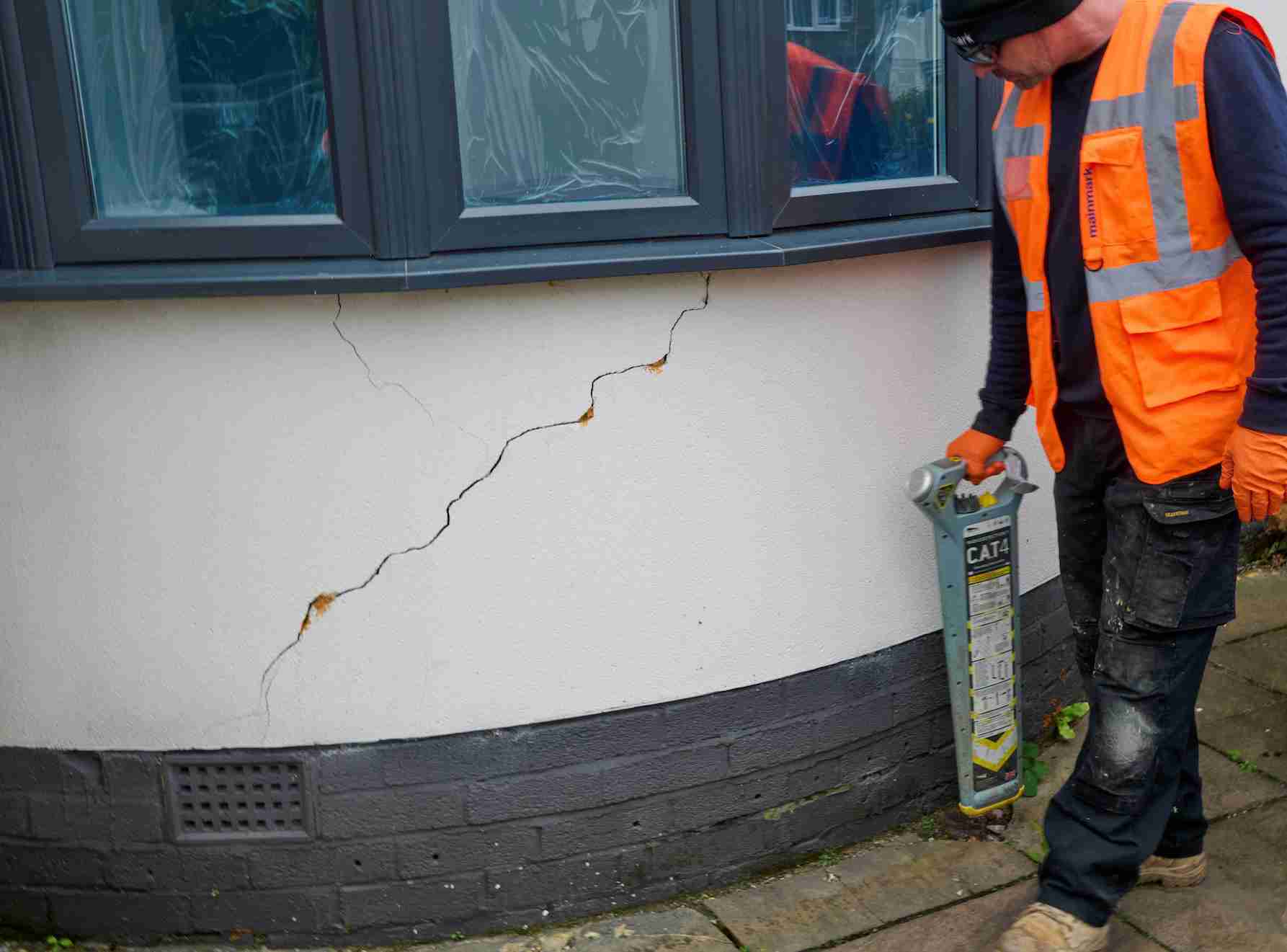
With Ireland experiencing its fourth hottest June in 127 years, specialist ground engineering expert Mainmark Ireland is urging infrastructure owners to consider how ground conditions are changing as a result, because both prolonged rainfall and drought can contribute to void formation and ground movement.
If not addressed, subsidence can harm infrastructure performance and longevity.
Cork, County Dublin and Meath face subsidence and sub-structural movement owing to compressible, clay-rich soils. Ireland’s varied geology also puts it at a higher risk of sinkholes in limestone-heavy areas, erosion and washout in flood-prone lowlands and coastal zones. Its granite and sandstone uplands can experience landslides and ground slips in prolonged weather, which was evident with the landslide in South West Donegal earlier this year.

Compared to the UK, where subsidence is largely driven by clay shrinkage and swelling, Ireland is more likely to experience less predictable and potentially more severe subsidence in localised areas. Ireland has already experienced high-profile examples of ground-related issues. This includes a Donegal housing estate nicknamed the ‘Titanic’ being impacted by subsidence and a family having to leave their home after a sinkhole appeared due to a burst pipe.
Mainmark Ireland, led by Ireland Director Ray Brennan says the industry needs to broaden its approach to climate resilience planning.
“While some ground-related issues may appear overnight, many emerge gradually, through settlement, void formation or changing groundwater conditions, before becoming visible at the surface,” he said.
“By taking a more proactive approach to understanding and addressing ground-related risks, infrastructure owners can reduce whole-life costs of their infrastructure.”
Mainmark Ireland will be holding an industry briefing and networking dinner at Engineers Ireland, 22 Clyde Road, Dublin D04 R3N2, on Thursday, 13 August 2026. Mainmark Ireland will discuss how its proven techniques are now supporting projects in Ireland, including approaches to subsidence remediation, void filling, ground strengthening and extending the life of existing assets.
Learn more and register here.