














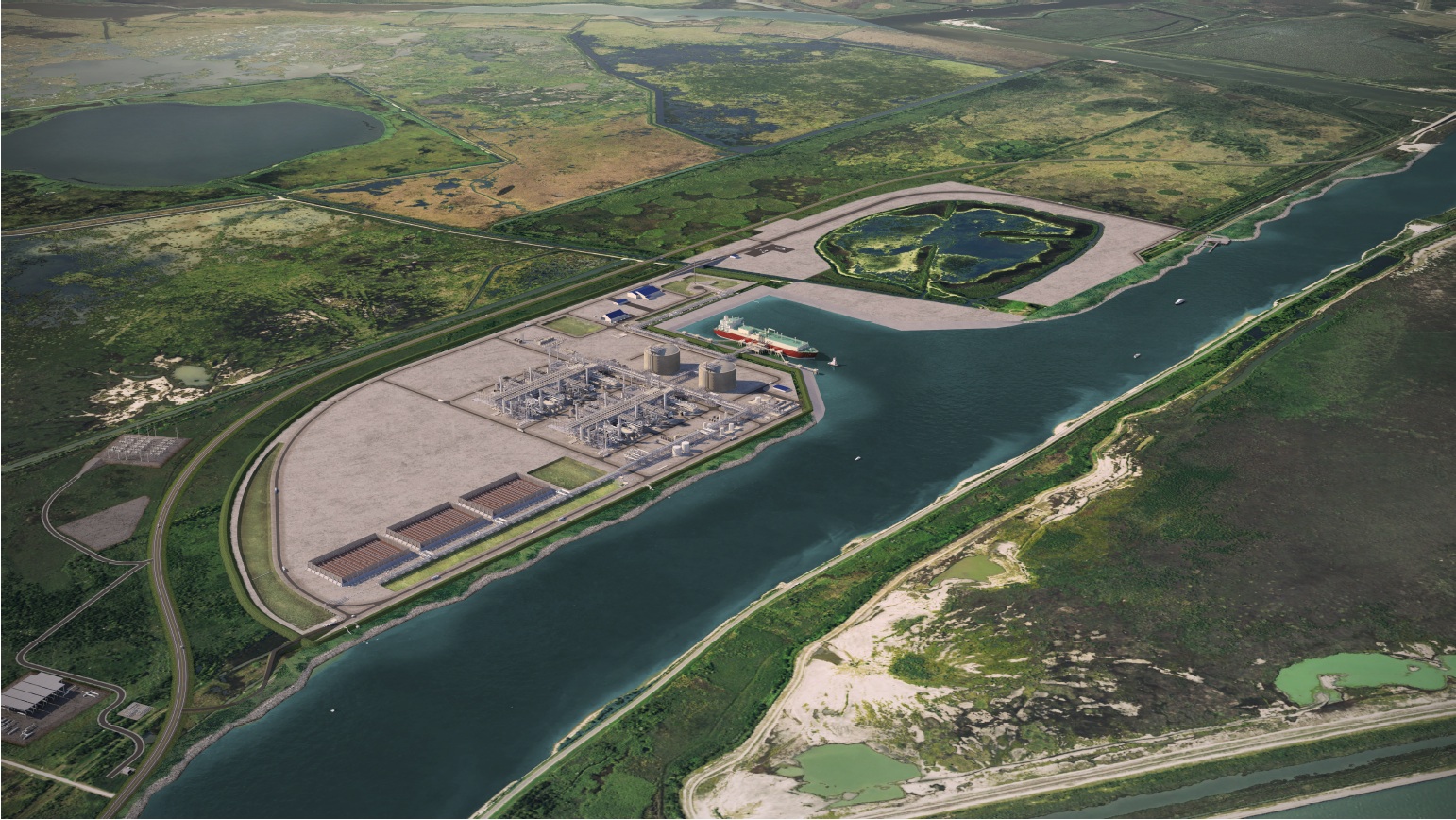
Bechtel has identified seven factors leading to the deaths of three workers building phase 1 of the Port Arthur liquid natural gas terminal in Jefferson County, Texas on 29 April this year.
During the night-time operation, at 1.44am, a five-person crew was working at height on the side of a large concrete tank when the climbing formwork system they were standing on gave way.
Three men – Reginald Magee, Felipe Mendez, and Felix Lopez Sr – died. The other two were injured.

Formwork jumping involves lifting the formwork system, including the platform the team stands on once it’s secured, and resetting it higher on the side of the tank to tie the rebar and pour the next layer of the tank’s concrete wall.
The men had successfully jumped and set eight sections during their shift. They were setting the last section when the platform gave way.
The proximate cause was that one of the platform’s two brackets hadn’t been properly set onto the bolt cast into the side of the tank to secure it.
But the analysis co-signed by Craig Albert, Bechtel’s president and chief operating officer, and Paul Marsden, president for energy, identified six other factors, including the three men’s failure to anchor their personal fall-arrest systems, and the absence of more experienced crew members.
Below are the seven factors and the steps Bechtel is taking to address them.
“The overwhelming sense of shock and grief we felt in that moment hasn’t faded,” Craig Albert and Paul Marsden write.
“The purpose of sharing our findings is to promote transparency, accountability, and learning, helping Bechtel—and the wider industry—anticipate risks and act proactively on safety.”
1. Improperly secured bracket connection
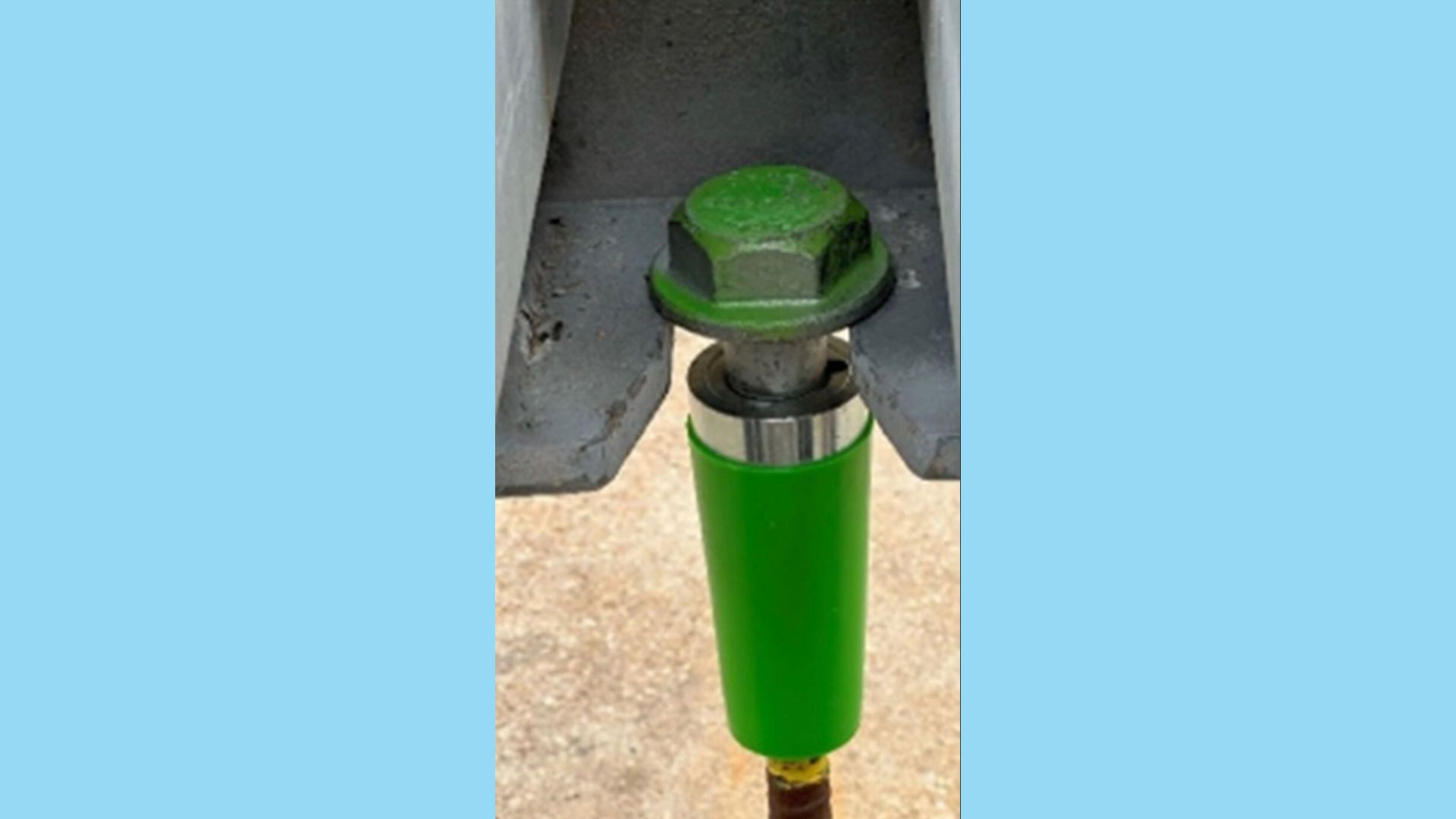
When the fall happened, the bracket connection on the formwork wasn’t securely attached to the cone screw, a form of steel bolt with an integrated washer (pictured).
The cone screw is screwed into an embed (shown in green) that is cast into the concrete wall of the tank. Each panel of the formwork has two vertical brackets that hook onto a cone screw, securing the panel to the tank wall.
In this case, the left-side bracket had come to rest on top of the integrated washer – on the bolt head – rather than in its proper place on the shaft. So, the platform was susceptible to breaking free.
The crew hadn’t noticed.
When the crew gave the crane operator the signal to release the rigging used to lift the formwork into position, the unsecured bracket failed and the left side of the formwork dropped to an angle that led to the crew falling off the platform.
Bechtel’s response:
“We have implemented a documented triple-verification process across every Bechtel project that uses this formwork system to ensure brackets are properly seated before releasing the rigging and work proceeds.
“Immediately after the incident, we suspended all formwork jumping at night, when reduced visibility makes verification more difficult. This has been implemented across all Bechtel projects and will continue indefinitely.”
Bechtel also revised its procedures code to integrate these lessons.
2. Fall-arrest equipment not anchored
All five crew members were wearing personal fall arrest equipment provided, but when the formwork tilted, the three who died “appeared not to have their fall arrest lanyards attached to an approved anchorage point”, Bechtel said.
The other two had attached their lanyards to an anchorage point, so their fall was arrested.
All five had received the fall protection training provided to all new craft professionals in their induction.
Bechtel’s response:
“We updated our requirements so that when a foreman and general foreman supervise crews working at height, they must also attend additional fall protection training to strengthen their ability to apply requirements, coach their teams, and identify hazards.
“We updated our company-wide training package for jumping formwork to include clearer, more visual guidance on the proper tie-off procedures for this specific type of repositioning work.
“We are strengthening our fall protection training—to be applied across all Bechtel projects—by engaging a third-party expert to integrate industry-leading practices into our training content and delivery. This will include an annual audit of our program, along with a standardised refresher training process for all personnel involved in performing work at height.
“We are increasing oversight across all Bechtel projects by having our ESH professionals, line supervision, and Craft-Based Leadership focus on observing and intervening in work-at-height activities. This approach will help ensure full compliance while collecting workforce feedback to continuously improve our training and recertification program for working safely at height.
“Our approach on this has been termination of employment for known violations of our Life Critical Rules, including fall protection. To encourage a peer-to-peer intervention culture, we are modifying our disciplinary program to suspend disciplinary action when the violation is identified and corrected within the crew.
“However, in the event of failure to correct the violation within the crew or repeat violations, our Life Critical Rules and the consequences, up to and including termination of employment, will be strictly implemented.”
3. Inadequate training
All five of the crew were recent hires who, at the time, had limited or no prior experience in repositioning formwork by jumping.
They had completed Bechtel’s general fall protection training and had received on-the-job training and experience jumping formwork during shifts prior to the incident.
But they had not received the 30-minute classroom training prepared by supervision for the formwork jumping system they were using.
Bechtel’s response:
“Immediately after the incident, we suspended all formwork jumping work across the company and inspected all formwork systems, including all connection points.
“We have developed a comprehensive Climbing Formwork Training and Qualification Program that outlines the requirements for training, evaluating, and qualifying personnel involved in the assembly, disassembly, installation, repositioning, operation, inspection, and use of climbing formwork systems.
“We have retrained all personnel currently involved with formwork jumping using these updated procedures.
“We are implementing a multipoint-verification system for supervisors to verify that all workers have completed all required training related to the relevant life-critical work before they are allowed to perform such work.”
4. Experienced crew members weren’t there
At the time of the incident, the two most experienced crew members – the foreman and the leading hand – were not present on the formwork.
They had been with the crew for most of the shift, but had been called away to assist elsewhere shortly before the incident.
Bechtel’s response:
“We have mandated that for all projects where we are conducting formwork jumping, the foreman supervising or the leading hand in the crew, depending on the work activity, will not only have been trained and experienced in conducting formwork jumping but will also have received additional training to become adept at identifying and correcting any hazards associated with the work.
“We have mandated that the foreman (or leading hand in the foreman’s absence) for each crew performing formwork jumping be present for, and directly supervise, the formwork jumping activities until the system has been triple-verified as properly engaged and secured.”
5. Noncompliance with Bechtel’s mentoring process
Bechtel policy includes a four-week mentoring process where newly hired craft professionals are paired with veteran employees to help with knowledge sharing, including understanding ESH requirements.
In this case, there was not a 1:1 buddy pairing between the crew members and more veteran colleagues.
Bechtel’s response:
“The initial four-week mentoring (safety buddy) program will be reinforced with weekly check-ins conducted by a supervisor, as part of the four-week verification and evaluation process managed by Workforce Services.
“We have established a requirement that, when assembling crews and assigning them to their foreman, no more than half of a work crew may consist of craft professionals who have been on site for less than three months. In situations where a project or activity is just beginning and all employees may have less than three months of service, site leadership and ESH leadership will include specific training, information, oversight, and observational programs to accommodate the project specifics. This will be addressed in the project’s mobilization plan.
“We are supplementing this mentoring program with secondary training during the first three months on site, which includes monthly employee check-ins and additional focused life-critical training, with ongoing observation and support from Craft-Based Leadership teams and field professional staff. This applies to both craft professionals and our professional staff. Additionally, we will ensure that these individuals are easily identifiable through a distinct hard hat colour.
“Our Craft-Based Leadership teams, construction supervision, and ESH professionals will observe identified individuals and their crews to provide real-time coaching and mentoring at the workface, ensure compliance with safety requirements, and reinforce the training that these individuals have received.”
Here, too, Bechtel revised its procedures code to integrate these lessons.
6. Night working is more risky
Night shift construction work introduces unique risks compared to daytime work, Bechtel said.
Darkness, fatigue, reduced supervision, and visibility challenges increase the potential for incidents.
Bechtel said high-risk work should be scheduled during the day “whenever possible”.
Bechtel’s response:
“We have required each project to complete an assessment of the tasks required to be performed at night. Projects must document the specific measures that will be taken to manage the risks of that work, including the supervision level and skill, competence, and tenure of the work crew. Projects will continue to reassess these tasks as part of the weekly work plan procedure.
“Performing high-risk activities on night shift must be approved by the Project ESH Manager, Site Manager, Senior Project Manager, and GBU Functional ESH Manager, with notification to the Business Line General Manager and GBU President.”
7. Safety culture not applied
Bechtel said it had always fostered a strong safety culture and had “consistently pioneered new ways” to improve safety.
“This incident showed us that, for this particular work, our culture was not applied consistently from senior management all the way to the workface,” the company said.
Bechtel’s response:
“We are launching a company-wide, long-term program aimed at eliminating the microcultures that can develop within a large organization. Effective immediately, our Safety Task Analysis Risk Reduction Talk/Field Level Hazard Assessment (STARRT/FLHA) cards—used in crew-level discussions at the start of every shift—have been updated to include a dedicated focus on life-critical work.
“This change ensures a specific discussion between each crew and their supervisor about the work they plan to undertake—confirming that crews understand the life-critical safety measures required for their shift, affirm their readiness to implement them, and make a mutual commitment to look out for one another and to intervene during the work to correct any noncompliant situations.
“In the months ahead, we will continue making improvements designed to strengthen and embed Bechtel’s safety culture throughout the company, from management to the workface, at every jobsite and office, and in every activity.”
‘Findings may evolve’
Bechtel said the analysis reflects its current understanding of the incident based on the information and firsthand accounts available at the time of its internal investigation.
The company adds: “The report does not assign legal responsibility or represent final conclusions. Findings may evolve as additional information becomes available and reports from third parties are released.”
- Subscribe here to get stories about construction around the world in your inbox three times a week
Background: